
The
Stage
-
07/09/06


ARTICLES ABOUT DOROTHY FROM LOCAL NEWSPAPERS IN SOUTH WALES
Bernie
Burgess was a member of the popular Fifties harmony group The Four Jones
Boys and also married to the legendary Ruby Murray for many years.
 Bernie
writes: “Dorothy Squires was by far the best female singer/performer I
ever saw in my 50 years in showbusiness. I remember seeing her perform at
the Grand Theatre in Swansea. I called at the stage door but no one was on
duty, so I sneaked in and found myself side stage without being
challenged. I stood in the wings mesmerised by her electrifying
performance.
Bernie
writes: “Dorothy Squires was by far the best female singer/performer I
ever saw in my 50 years in showbusiness. I remember seeing her perform at
the Grand Theatre in Swansea. I called at the stage door but no one was on
duty, so I sneaked in and found myself side stage without being
challenged. I stood in the wings mesmerised by her electrifying
performance.
The Four
Jones Boys appeared on one of Dorothy’s variety bills, at the Gourmont
Cinema in Cardiff. She asked us to do some vocal backing during her act,
which we gladly did. She then asked us to appear on another of her bills
at the Finsbury Park Empire. The head of booking at Moss Empires was the
formidable Cissie Williams who would not allow us to appear because she
had not vetted the act. Dorothy, in her usual way, forcibly told Cissie
Williams in her own choice words that she would include us anyway and we
appeared! In later years Dorothy recommended The Four Jones Boys to Decca
which resulted in a recording contract.
In 1956 we
were booked to appear in a Bernard Delfont summer season show in Southsea,
and Delfont himself came from London to see the show. Up to that point he
had never seen us doing a live performance. He was suitably impressed and
told us that he was starting a fortnightly variety season at The Prince of
Wales in the West End and he wanted us to do a fortnight’s engagement on
a bill with Mel Torme. We were all fanatical Mel Torme fans so we were
pleased to accept. We were contracted for a fortnight in the November but,
sadly, Mel Torme was taken ill and was unable to appear.
The
replacement top-of-the-bill was a strange choice – Hylda Baker was
engaged. Hylda was a very funny woman but to appear as a top-of-the-bill
in the West End was a questionable undertaking. The show was packed with
numerous well-known variety artists including Morecambe & Wise, Derek
Roy, Billie Anthony, Charlie Carroll and Paul, Jo, Jac and Joni, and Joe
Church.
We were
allocated eight minutes in the front ‘tabs’ and, as a consequence, we
had no time to carry out our usual varied act of singing, comedy and
straight songs. We struggled to get by but sitting on the front row,
knowing full well we were restricted, but cheering us on nonetheless, was
none other than Dorothy Squires – bless her.
Purely in my
humble opinion, the great Shirley Bassey used all of Dorothy’s
techniques and mannerisms, which included the over exaggerated hand
movements, the grimacing, the over emphasised light and shade, and the
dramatic ‘belting’. Apart from the colour of her skin, she almost
became Dorothy’s double. I have often wondered whether if asked in an
interview what sort of influence Dorothy Squires had on her own
performing, what Dame Shirley’s honest answer would have been.
 Thanks
for those memories of Dorothy, Bernie. Incidentally, readers will be
interested to know
Thanks
for those memories of Dorothy, Bernie. Incidentally, readers will be
interested to know
Incidentally,
at the time of Dorothy’s concert appearances at New York’s Carnegie
Hall and the Dorothy Chandler Pavilion in Los Angeles (then home of the
annual Academy Award presentations) in the early Seventies, Shirley Bassey
– appearing on an American coast-to-coast talk TV show – said that
Dorothy was one of the greatest singers to have ever come out of Wales and
that she was finally being recognised for that.
BBC
WALES - THE GIRL WHO LOVED AND LOST JAMES BOND
Click to read in-depth article featuring archive footage
Thought you might be interested in this article from 8th May.
It says that Llanelli Community Heritage have been liaising with Roger Moore about a blue plaque for Dorothy's former home. They're organising someone who can avail it, as Roger wouldn't be available. Ruth Madoc has now agreed. The unveiling is set for tomorrow - apologies for not letting you know sooner but haven't long spotted the article. We (myself, my brother and Dad) aren't involved with Llanelli Community Heritage anymore, but I thought you would be interested to hear of this local story for Dorothy. Dad and his heritage colleagues are still hoping that the Ritz building can be granted listed status, especially considering its links with Dorothy. Once he hears further I'll let you know.
- Alec

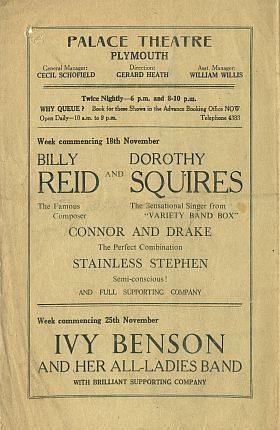
“Say
It With Flowers” - PROMOTION
WOMAN'S
HOUR (RUTH MADOC INTERVIEW) - BBC RADIO 4 (MAY 16th, 2013)
“Say It With Flowers” - REVIEWS
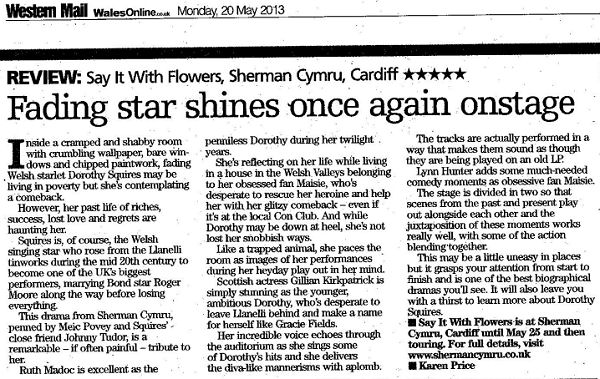
~
Say it with Flowers opened at the magnificent new Sherman Theatre in Cardiff and is subsequently on tour over the country. This play focuses on singer, songwriter and Diva Dorothy Squires, situated during her attempt to settle into her new and ultimately final abode;residing with an ardent fan. Throughout the show, flashbacks from Squires’ past offer the audience an accurate vision of her former triumphant talent. Ruth Madoc and Gillian Kirkpatrick play ‘Old Dot’ and ‘Young Dot’ respectively and deliver a tour de force through their sublime performances never resorting to impression or caricature yet leisurely morphing into the Diva herself.
Moreover, the entire cast of Say it with Flowers provide outstanding performances such as Heledd Gwynn’s characterisation of Emily, Dot’s estranged niece, Matt Nalton’s portrayal of a randy roguish Roger Moore, and Aled Pedrick doubling as Dot’s brother and a priapic Billy Reid. Furthermore, a particular plaudit must be handed to Lynn Hunter for her extraordinary performance as Maisie, Dorothy’s fan. The ensemble possesses remarkable singing skills and vocal prowess whether it is solo or in harmony, whilst Dyfan Jones’s musical direction is meticulous and inspiring. The sets and lighting are both innovative and remarkable thereby replicating a suburban living room on one side with a performance stage and pit opposite. Towards the end of the second act, the set transforms into a hospital ward with ease and allure.
Say it with Flowers is also a study of the human condition where individuals exploit others for their own gain yet ultimately regret it and re-establish positive relationships with each other. This can be a difficult thing to convey, however Authors Meic Povey and Johnny Tudor achieve it within this superbly crafted piece. Praise should also be offered to the Director, Pia Furtado whose expertise shaped this fine production, and to Georgia Lowe; the Designer, Katherine Williams, Lighting Designer, and the whole of the greatly talented Production Team. Overall, Say it with Flowers is a unique production and a splendid theatrical experience which should be highly recommended to potential audiences.
~
Philip Lee-Thomas, a longtime Dorothy Squires admirer, offers this view of the Say It With Flowers stage production
'SAY IT WITH FLOWERS' Review
Last week I attended a performance of a new play about Dorothy Squires called 'Say It With Flowers', written by Meic Povey and Johnny Tudor, the latter a close friend of Dorothy's.
The play begins with the older Dorothy - played ably by Ruth Madoc - arriving bankrupt and penniless in Trebanog, South Wales, to live in a house given to her by her "biggest fan", Maisie. Dorothy, it transpires, is dying of cancer, and, like some caged animal, she stalks her sombre surroundings while looking back on her past with a mixture of regret and nostalgia. These memories are brought to life on the other side of the stage, where the younger Dorothy - played by the Scottish actress Gillian Kirkpatrick - leaves Llanelli behind with a "pocketful of dreams", and through the subsequent milestones in her life, her rise to fame, meeting and divorcing Roger Moore, and examining Dorothy's relationship with her brother and niece.
At times the split-stage presentation felt like two different playss giving the first half a disjointed feel. This is exacerbated by some of the action taking place in the Sherman Theatre's orchestra pit, which the audience - save for those in the front couple of rows - could not see clearly.
After the interval the two halves interacted more, culminating in an astonishing scene change leading to Dorothy's admission to hospital, mirroring her confusion and anxiety.
Several of Dorothy's more famous songs were performed magnificently by the aforementioned Kirkpatrick, and indeed these moments were the highlight of the evening.
Maisie is played as an enthusiastic, albeit obsessive, control freak, who provides Dorothy with a run-down and unpleasant- looking hovel. In my knowing the real-life 'Maisie' (Esme Coles), I am aware this is hardly accurate, but I am equally aware that this is a dramatic device, in illustrating how far Dorothy has fallen, and giving her a more dramatic 'foil' to play against. Lynn Hunter's performance as Maisie was funny and poignant, though the character is so well-drawn, and having so much time on stage, that at times it threatens to dominate the play.
In contrast, Dorothy is frequently shown as bitter or malicious, but these scenes are mostly played merely for laughs; there seems to be very little interest in exploring in any detail why Dorothy could be so cruel to others. There is a greater, and more tragic story here about a complex woman which is largely unexplored, and ultimately, the part feels under-written, being all surface and no depth.
In the end this was a diverting piece of theatre with some enjoyable moments and performances, and while by no means perfect, I would recommend any fan of Dorothy to see it during its tour of Wales, playing at venues in Mold, Milford Haven and Llanelli."
“Say It With Flowers” Stage Production To Open in Cardiff

Hot on the heels of Dorothy Squires – Mrs Roger Moore, the stage production which took the Edinburgh Festival by storm last summer, comes another stage play about Dorothy, Say It With Flowers, written by Johnny Tudor and Meic Povey, which opens at the Sherman Theatre in Cardiff on 15 May 2013. After two weeks at the Sherman, the production will go on tour around Wales including the Theatre Clywyd, a new theatre in Dorothy’s hometown of Llanelli called The Ffwrnes, The Torch Theatre in Milford Haven, and then Aberystwyth.
Johnny
Tudor, the Welsh entertainer who supported Dorothy at her 1970 London
Palladium comeback concert, says that the stage production based on
Dorothy’s eventful life is ‘going great’. “The show goes into
rehearsal on 15 April, and I’m hoping that we can get a management
interested in bringing it over the Severn Bridge to England. Dorothy
deserves to be back in London.”
Johnny – whose father was an old family friend of the Squires family, and who himself knew Dorothy from being an infant – was commissioned by the Sherman Theatre in Cardiff to write the play Say It With Flowers with BAFTA winning playwright, Meic Povey. Johnny says: “The really good news is that the Sherman Theatre recently received full funding from the Arts Council of Wales for a tour.”
CAST
MATURE DOROTHY - RUTH MADOC
YOUNG DOROTHY - GILLIAN KIRKPATRICK
ROGER MOORE - MAT NALTON
EMILY SQUIRES - HELLEDD GWYN
FREDDIE SQUIRES - ALED PEDRICK
MAISIE - LYN HUNTER
Flamboyant,
stubborn and always ready with a sharp one liner… Dorothy Squires was
the pint sized phenomenon who rose from the Llanelli tin works to the
heights of the West End and Broadway to become one of Britain's most
successful performers.
Her
life was as dramatic as her songs and was often the focus of media
attention; her electrifying on-stage presence, her sell-out comeback
concerts at the London Palladium and her tempestuous marriage to Roger
Moore, were overshadowed by her predilection for litigation and battles
with Rupert Murdoch, resulting in her being made a vexatious litigant.
This
rags to riches story follows Dorothy's journey ending with her sad demise,
back where she started, in the South Wales Valleys.
Written
by Meic Povey and Johnny Tudor, Say It With Flowers features some of
Dot’s best loved songs. Everyone loves a fighter and Dorothy certainly
did it her way – but where did it all go wrong?
15-25
May, 7.30pm
Previews: 15-16 May
Previews:
£12-£20
£15-£22 | Concessions: £2 off
Under 25s Half Price
Production
performed in: English
Post-show talks:
16 May (with writers)
For
more information visit:
http://www.shermancymru.co.uk/performance/theatre/say-it-with-flowers/
Interview
With Johnny Tudor
http://www.walesartsreview.org/say-it-with-flowers-a-conversation-about-dorothy-squires/
Star's life proves an inspiration for musician's single
THE life of tragic Pontyberem-born Hollywood star Dorothy Squires is the inspiration behind a new song by Llanelli songwriter Christopher Rees.
The 39-year-old former Bryngwyn school pupil is set to release the single Alright Squires on January 21 before his sixth album Stand Fast comes out on February 18.
The singer-songwriter said he had decided to write the song after seeing a television documentary about Ms Squires's story.
He said: "It's an amazing life story really, it's quite a rollercoaster.
"I knew very little about her until I stumbled across a documentary a few years ago.
"I was completely gobsmacked to realise there was this world- famous Hollywood singer that came from my home town.
"She was a big star, living in Hollywood with Roger Moore.
"Then her fall from grace is pretty dramatic — the things she did in the '70s, the fact she became addicted to suing the newspapers and the pretty tragic tale of her house burning down and ending up living off the charity of a kind fan in the Rhondda.
"It's a pretty rags to riches back to rags story, which I find absolutely fascinating."
Mr Rees, who is now based in Cardiff, said a theme of his new album was resilience and strength.
"I think this album is probably more in tune with where I am right now," he said.
"It's quite a resilient sounding album. It sums up the determination and resilience that I have to find each day to keep doing what I love — to make music.
"It's quite personal. It relates to the way I live my life."
He said after his last album Heart On Fire, which was heavily influenced by his love of soul music, Stand Fast had more in common with his earlier work.
Like all of his music, the album draws on the influences of the southern states, featuring the banjo, twanging guitars and harmonica.
Mr Rees said he was looking forward to appearing at the South by Southwest Festival in Texas in March — as well as playing a few dates in Wales.
With thanks to This Is South Wales
Llanelli Community Heritage's website includes the following interesting article about Dorothy's early years in South Wales, written by Lyn John.
http://www.llanellich.org.uk/Files/dorothy-squires3.html
New
Kathy Kirby Biography
 The
late Kathy Kirby was one of the
most popular female singers of the Sixties, with big-selling singles like Secret
Love, Let Me Go Lover, and
Dance On, and her own BBC TV series, The Kathy Kirby Show, which
saw her dubbed ‘the golden girl of pop’. Sadly her career –
and personal life – went into decline however after the death of her
Svengali manager, mentor and lover, former bandleader Bert Ambrose, in
1971 and for three decades afterwards Kathy lived a very reclusive
lifestyle at her home in Kensington, west London. She died in May 2011 at
the age of 72.
The
late Kathy Kirby was one of the
most popular female singers of the Sixties, with big-selling singles like Secret
Love, Let Me Go Lover, and
Dance On, and her own BBC TV series, The Kathy Kirby Show, which
saw her dubbed ‘the golden girl of pop’. Sadly her career –
and personal life – went into decline however after the death of her
Svengali manager, mentor and lover, former bandleader Bert Ambrose, in
1971 and for three decades afterwards Kathy lived a very reclusive
lifestyle at her home in Kensington, west London. She died in May 2011 at
the age of 72.
Now
Kathy’s long-time friend Mark Willerton – whose Burtey
Fen Collection museum near Spalding in Lincolnshire, is a ‘must
see’ for any fans of Fifties and Sixties popular music – has written a
superb biography on the life of Kathy, entitled The
Real Kathy Kirby – No Secret Anymore (Matador Books). The 372-page
hardback book is beautifully illustrated with glossy photographs of Kathy
from her career, and also includes a complete discography of her
recordings as well as every television and radio appearance she made in
the UK (and during the Sixties it seemed that she was never off the air,
either on radio or television).
In many
ways, Kathy’s life and career mirrors that of Dorothy
Squires. Both women knew the highs and lows of show business life, had
troubled private lives, and were ignored by the media in later years. They
also possessed powerful singing voices and delivered their songs with true
emotion. Both Kathy and Dorothy have retained huge fan followings that
have stuck by their respective idols through both the good and the bad
times.
In fact,
Dorothy is mentioned several times in Mark’s authorative biography about
Kathy. He relates an amusing incident at Brighton’s Theatre Royal when
Kathy was headlining a bill with Arthur Askey and Hetty King, and Dorothy
and Lita Roza were together in the audience. When Kathy introduced her
latest recording which just happened to be her version of My
Way, Dorothy was overheard to say ‘She’s singing MY song’ –
but in much fruitier language! Kathy was also a frequent guest at
Dorothy’s famous show business parties at her home in Bexley, and pays
tribute to Dorothy in the Memories
section of this website.
The Real Kathy Kirby is a fascinating book about a remarkable person and performer, and Mark Willerton’s research – as well as drawing on his own personal memories of Kathy – is quite astounding. It puts an earlier, flimsy biography about Kathy by another person to total shame. Mark celebrates Kathy’s life and career but has not been afraid to chronicle with total honesty the sadder years when she and career went into decline. By the end of this biography, the reader almost feels that they knew Kathy personally – even if they had never actually met her.
Mark’s book can be obtained direct from www.kathykirby.org.uk, retailing at £19.99. This book is head and shoulders above many of the other biographies that abound about show business stars and TV reality show nonentities, and is an essential read for any fans of popular music singers. I’m sure that Kathy herself would have been pleased with Mark Willerton’s literary endeavours which successfully combine genuine affection for his subject and a realistic ‘warts and all’ approach. This is a superb book about a truly iconic singing star of the Sixties.

JOYCE GOLDING (1922-2012)
 Former
variety and stage performer Joyce Golding, who was married to Dorothy Squires’ brother William
‘Freddie’ Squires, and the mother of Dorothy’s niece Emily Squires, died on Christmas Eve 2012 at the age of 90. Joyce
had been in failing health in recent months but died peacefully in Hove,
where she and Emily shared a home.
Former
variety and stage performer Joyce Golding, who was married to Dorothy Squires’ brother William
‘Freddie’ Squires, and the mother of Dorothy’s niece Emily Squires, died on Christmas Eve 2012 at the age of 90. Joyce
had been in failing health in recent months but died peacefully in Hove,
where she and Emily shared a home.
Joyce
Golding was one of Britain’s most successful variety acts during the
late Forties and the Fifties. Her show business career started when Joyce
was a teenager in the early Forties and with the NAAFI
(Navy, Army and Air Force Institute), working as a shop assistant and
helping out with the laundry. Battersea, south London, born Joyce kept her
colleagues entertained with wickedly accurate and hilarious impressions of
famous film stars of the day, with the result that two friends applied for
her to join ENSA (the Entertainments National Service Association).
Joyce was
invited to an audition at London’s Drury Lane Theatre before being sent
across Europe to entertain the troops during the war years.
Her act, Creating An Impression,
combined jokes and sketches with musical interludes.
She was billed as Joyce Golding, rather than her married name of
Joyce Squires. After the war,
Joyce’s talent was spotted by Joe
Collins, the father of film star Joan
Collins and best-selling author Jackie
Collins, and was signed to his theatrical agency, based in Islington,
north London. She starred in the 1948 slapstick comedy film Trouble
In The Air – still regularly aired on television - alongside Jimmy
Edwards, Freddie Frinton, Jon Pertwee
and Bill Owen.
Joyce also
undertook a six-week stint at the
London Palladium in 1950 and also appeared at the famous Collins
Music Hall in Islington. She also appeared on the same bill as The
Andrews Sisters at the notorious Glasgow
Empire in 1952 – a venue renowned as being a graveyard for English
comedians. She came through the experience with flying colours.
Joyce also
made a name for herself playing the traditional ‘dame’ in panto, a
role that was usually a male prerogative.
The late show business mogul Lord
Grade, who presented her in some of his pantos, said: “Joyce
Golding was the funniest woman I ever saw on a stage.
She could make an audience laugh without even opening her mouth.”
Joyce met
her husband Freddie Squires when she deputized at the last minute for
another actress at the Palace Theatre in Blackpool.
They married in 1949 and their daughter Emily was born the
following year. Joyce
continued performing while pregnant, including sharing a bill with a young
Petula Clark.
Joyce spent many weekends with her sister-in-law Dorothy and (Sir) Roger Moore, who were married from 1953 to 1969, at their home in Bexley, Kent. In 1952 she appeared alongside Dorothy and Roger (who was playing The King in one of his earliest and rare stage performances) at the Brixton Empress Theatre, south London, production of Jack And The Beanstalk. Their daughter Emily took her first riding lessons alongside Roger during his preparations to play the title role of Ivanhoe in the hit ATV series.
Joyce starred at the Brighton Hippodrome in the late Forties, opposite Max Bygraves, and also worked with the great comedian Max Miller. She also appeared frequently on the same theatre bill as the late musical tenor David Hughes during the Fifties.
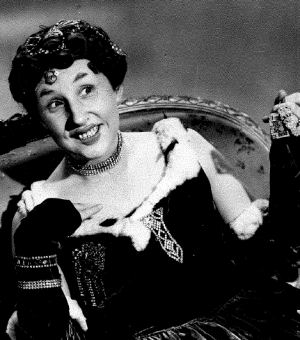 Joyce’s
husband Freddie Squires died in December 1955 at the early age of 35.
Joyce was due to appear as a guest performer on a Vera
Lynn TV show the following day. Whereas many a performer would have
pulled out of the commitment, for Joyce it was very much a case of ‘the
show must go on’ and she appeared alongside Dame Vera for the recording.
For the next few years Joyce concentrated on bringing up their young
daughter Emily Jane while continuing to perform in theatres around the
country, most notably on the prestigious Moss Empires circuit.
Joyce’s
husband Freddie Squires died in December 1955 at the early age of 35.
Joyce was due to appear as a guest performer on a Vera
Lynn TV show the following day. Whereas many a performer would have
pulled out of the commitment, for Joyce it was very much a case of ‘the
show must go on’ and she appeared alongside Dame Vera for the recording.
For the next few years Joyce concentrated on bringing up their young
daughter Emily Jane while continuing to perform in theatres around the
country, most notably on the prestigious Moss Empires circuit.
In the late
Fifties Joyce worked as a successful double act with Brighton actor and
singer Tony Stuart. She
finally gave up the theatre in 1962, finding interest was dwindling in her
style of variety. However she
and Tony Stuart staged festive variety shows for six consecutive years at
the 42 Club in Brighton.
In 2002, at
the age of 80, Joyce became
recognised as Britain’s oldest newspaper delivery ‘girl’, and
finding her achievement written about in some of the newspapers that she
delivered by scooter around the homes of Hove. In recent years she had
lived quietly with Emily at their home.
Emily
said: “Mum celebrated her 90th birthday on 28 July 2012 but in recent
months had slowed down considerably, and the end came peacefully. She was
a remarkable woman and had enjoyed a successful caree
Joyce
Golding’s funeral will take place at Brighton
Crematorium on 14 January 2013
and her ashes will later lie alongside those of her mother who also lived
in Brighton. Her late husband Freddie is buried in Streatham Vale
Cemetery, sharing the same grave as his sister Dorothy.
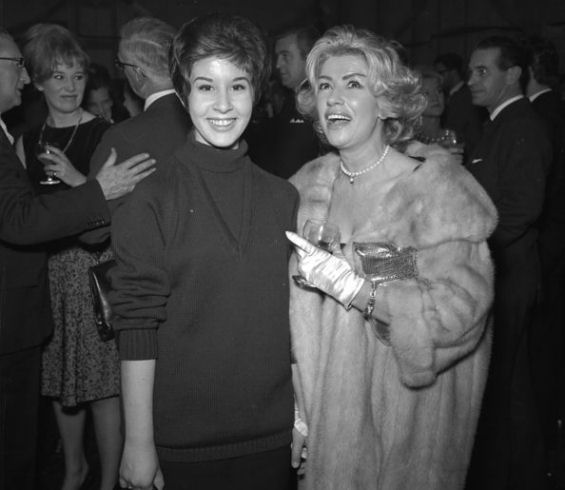
Dorothy Squires and Helen Shapiro
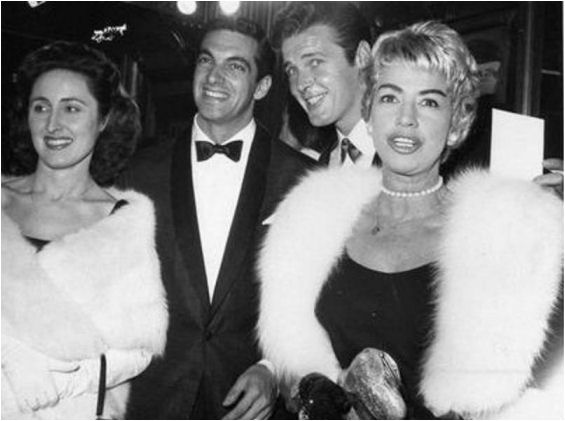
Dorothy Squires and Roger Moore with Frankie and Stella Vaughan at the London premier for Frankie's film 'Let's Make Love' (in which he co-starred with Marilyn Monroe and Yves Montand)
Courtesy of the Burtey Fen Collection
LADIES OF SONG
The ever-popular Barbara Windsor and her radio producer Graham Pass did Dorothy proud in the Radio 2 series Barbara Windsor’s Ladies Of Songs, which also included similar tribute documentaries to two other iconic British female performers, Alma Cogan (which was also produced by Graham Pass) and Kathy Kirby.
The one-hour Squires programme – scripted by Radio 2 presenter Russell Davies -was the last of the three specials to be broadcast (going out on the evening of 7 November 2012) and was preceded by an announcement that it contained language that might offend some listeners (or words to that effect). Even the Radio 2 website included a warning – anyone wanting to listen to the programme again on the internet, for seven days after the actual broadcast, had to tick the appropriate box indicating that they were an adult and not under age! It could only happen with a Dorothy Squires programme. The documentary did feature a studio out-take of Dorothy recording Where Do I Begin (Love Story) in which she let rip with the F word! And there were several references to her colourful language in general during the show.
Barbara’s tribute traced Dorothy’s career from beginning to end and included contributions from Sir Roger Moore, Lionel Blair, Bobby Crush, Rosemary Squires (who humorously recalled once being mistakenly taken for Dorothy’s daughter, and when Dorothy was seated just a few chairs away!) actor and variety Peter Charlesworth, radio presenter Pete Murray, Teddie Johnson, Emily Squires (Dorothy’s niece), entertainer Johnny Tudor and Esme Coles (the lady who provided Dorothy with a home during her last years). There were also spoken extracts from Dorothy herself, recorded just a few months before her death.
Music in the programme included If I Never Sing Another Song, My Way, Till, The Gypsy, Say It With Flowers, I’ve Gotta Be Me, Tree In A Meadow, and other songs closely associated with Dorothy’s long career. There was even an airing of the controversial The Chosen One, composed and recorded by Dorothy during what was obviously a very troubled period in her personal life, and which was only released after her death in 1998. As Barbara Windsor commented, it was almost like listening to a nervous breakdown caught on record.
Incidentally, Barbara also featured Dorothy on her Sunday programme (standing in for Elaine Paige) a couple of weeks later when she featured her 1970 hit recording of Till, describing her as “magnificent but volatile”, and both Dorothy and Kathy as being “two great songstresses”. Kathy’s Secret Love was also given an airing on the same programme, and the previous week Barbara played Alma’s 1961 recording of Hello Young Lovers.
The Dorothy documentary received various mentions in the media with the Daily Mail TV magazine listing it as the ‘best of the rest’ in its radio column. The Daily Telegraph also gave it an excellent pre-airing write-up. Barbara’s Ladies Of Song tribute to Dorothy also received plenty of advance ‘plugs’ on Radio 2, and featured an extract from For Once In My Life and a spoken quote from Dorothy, ‘Either you like me, or you don’t’.
Hopefully, for those who may have missed the programme, there will be a repeat broadcast at some time in the near future.
Sir Roger Moore

Sir Roger Moore was recently the featured guest on Piers Morgan’s Friday night ITV show (subsequently repeated at the weekend), discussing his long film and TV career – and his rather eventful love life. Dorothy Squires was naturally prominent among the former wives he mentioned.
Sir Roger recalled one incident between him and Dorothy which ended with her smashing his acoustic guitar over his head! He also recalled how, after their marriage break-up, she turned up at the home he had made with Luisa Mattioli. Dorothy smashed a window, reached through the glass and grabbed Roger by his shirt. A policeman who had been summoned said: “Madame you are bleeding” to which Dorothy replied, “It’s my heart that’s bleeding!”
Questioned by Morgan, Sir Roger confirmed that he had helped pay Dorothy’s hospital bills towards the end of her life. He also recalled phoning Dorothy who asked him about his new love (and now wife) Christina Tholstrup. “You’ve finally found the one for you, haven’t you?” she asked. Sir Roger commented on the show that he was glad to have Dorothy’s approval.
Sir Roger Moore has recently been in several “An Evening With …” shows around the country, which tied in with his new book Bond On Bond. His appearance at the Rose Theatre in Kingston-upon-Thames on 14 October 2012 also marked his 85th birthday. Interestingly, at this particular event, Dorothy was the only former wife mentioned during the course of the evening. Sir Roger recalled going to the United States with Dorothy, and landing a part in a Broadway show, A Pin To See The Peepshow. “It opened on 13 September 1953 – and closed on 13 September 1953!”
Publicity about Sir Roger Moore has been in overdrive with the commemorations for the 50th anniversary of James Bond. A two-page Daily Mail spread about Sir Roger, written by Glenys Roberts and illustrated with several photographs including one with Dorothy, recalled their marriage.
“After he left Doorn van Steyn, his next wife was Dorothy Squires who was 13 years older than him. Squires, who was 37 when they met, had dragged herself up into the limelight, having been born in Wales in the back of a van from which her parents sold fish and vegetables. She began her working life in a tinplate factory earning £2 a week but it was her partnership on and off stage with songwriter Billy Reid that set her on the road to settling differences with physical blows.
Reid was pathologically jealous and used to put a ladder up to their bedroom window to check his famous wife (webmaster: they were never actually married) was alone in bed. Cue, according to one friend, the ‘most wonderful rows, with broken chairs and flying records – something I’d never witnessed in my life’. When Squires met Roger at a party, after she walked out on Reid, they fell for each other in an instant. They were married in New York and his career under her tutelage started to flourish.
But when they reached Hollywood the marriage started to fall apart, especially when Dorothy Provine, Roger’s younger blonde co-star in the TV series The Alaskans, caught his eye. Friends recall there were some terrible public scenes and, by the time the couple came back to Britain, the rows became even worse. Roger, now 84, recalls one row when he was plucking a guitar to avoid confrontation.
‘I was sitting on the edge of the table strumming and she was ranting on about something and I wasn’t taking any notice. Next thing I knew it was like slow motion. I could feel the guitar coming out of my hands and see it up above my head and … bash, it came down. She ruined the guitar. She had a great temper.’
That marriage came to an end after Luisa Mattioli came on the scene. Moore, now a star in his own right, met Luisa in Rome where he went to make the film The Rape Of The Sabine Women. Luisa, then a luscious 28 – nearly 20 years younger than Squires – played one of the women.
Roger says, ‘Dorothy was not happy to find out I was having an affair’. He however remained fond of his ex-wife – who died in 1992 – despite her uncontrolled passion. ‘She threw a brick through my window, reached through the glass and grabbed my shirt, and cut her arms doing it. The police came and said, ‘Madame, you’re bleeding.’ And she said, ‘It’s my heart’s that’s bleeding.”
She was still so much in love with Roger that she refused to give him a divorce for seven years and, as a result, his first two children with Luisa were born out of wedlock. But that was not the end of the saga. Dorothy sued Roger for restitution of her conjugal rights. The judge ordered Roger to return to her, but he didn’t. She then tried to publish her autobiography, detailing secrets about Roger. Both he and Luisa won injunctions and the book never saw the light of day.
By 1969 Roger was free to marry Luisa but he had picked another woman who was not afraid to speak her mind. He divorced Luisa in 1996 and is now married to Danish socialite Christina Tholstrup. He says their relationship is tranquil.”
Dorothy Squires... My memories by Barry Hatcher.

I think it is fair to say that Dorothy Squires made a big impact on my life in the 1970's and beyond.
I first became aquainted with the voice of Dot Squires I think in about 1971, when I was working in a family pub in Surbiton, Surrey. The landlord and his wife were already great fans of Dorothy and used to talk about her, having been to the comeback concert at the London Palladium in 1970.
I became interested and my then landlord and now lifelong friend Danny promised that the next time they went to see a Dot Squires concert they would take me along to see her. This turned out to be her concert at The Royal Albert Hall and it was the first time I had been to a live concert like this. Wow, what an incredible experience !
From that moment I was an adoring fan of Dorothy Squires ! However , I was not to know at this point what was to follow or the wonderful experiences I would go on to have with this incredible and charismatic woman.
I remember, in October 1972, the trip to New York to see Dorothy appear at the Carnegie Hall. I was just 22 years old and this was the first time I had ever been on a plane, let alone crossing the big pond to America. I boarded that plane with some trepidation and the fear of a first time flyer.
Some way into the flight my travelling companion Colin disappeared to answer the call of nature , but didn't return. I sat in my seat wondering where he had gone and eventually curiosity got the better of me. I decided to go and find out what he was up to, as I knew Colin to be a bit of a character.
I found him having a quiet drink at the back of the cabin, along with the cabin crew. To my delight it appeared that the alcohol on the flight was free and we could just indulge as much as we wanted. So , not to be a party pooper I did !! By the time we reached New York, I hardly knew whether the plane was going up or coming down! I was properly pissed and glad to be so ! I do remember the plane circling over the Hudson River and seeing the Statue of Liberty from above. What a sight !
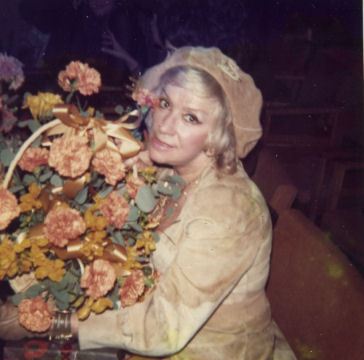 The
trip that was organised for Dorothy's fans lasted four days and it was
fabulous from start to finish. I recall after the concert at Carnegie Hall
there was an after-show party and in those days the word “ Party “ was
like a magnet to me so I was straight in there. It was a great time and I
will have an everlasting memory of meeting and talking to the famous
Hollywood actress Hermoine Gingold, who looked every bit the Hollywood
film star !
The
trip that was organised for Dorothy's fans lasted four days and it was
fabulous from start to finish. I recall after the concert at Carnegie Hall
there was an after-show party and in those days the word “ Party “ was
like a magnet to me so I was straight in there. It was a great time and I
will have an everlasting memory of meeting and talking to the famous
Hollywood actress Hermoine Gingold, who looked every bit the Hollywood
film star !
In the following few years Dorothy of course performed many more concerts and these were probably her best years, following her comeback at the London Palladium. I recall she was booked for a week at the “ Double Diamond “ club in Caerphilly.
I heard that she was doing this and was determined to take time out to go and see her there. I cannot recall how or where right now, but somewhere along the way I had become aquainted with her personal assistant / friend Elizabeth's daughter Jane.
I booked myself a room in the “ Castle Hotel “ in Caerphilly , and by pure chance my room was right across the hall from Dorothy ! I think I was there for about four days and, because of my association with Jane, I got to meet Dorothy in the hotel and was asked if I would help by acting as an escort for the girlfriend of Dorothy's pianist Kenny Brown. This simply meant making sure she was okay during the time Kenny was performing on stage, and other periods when he might be otherwise engaged. This I did with pleasure, having been given my own table in the club with all the food and drink we wanted for free! Hey, not a bad way to spend your evenings I recall !
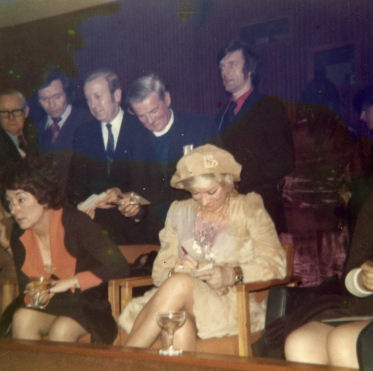 After
the shows we would return to the hotel with Dorothy and then, after
collecting our sandwiches from the kitchen - yes, true! -we would all then
go up to Dot's room and sit and have our sandwiches, and a drink or two,
and listen to Dot recounting her days with Roger Moore and many other
fascinating tales from her glorious life. These were wonderful times and I
think I was completely in awe of this woman!
After
the shows we would return to the hotel with Dorothy and then, after
collecting our sandwiches from the kitchen - yes, true! -we would all then
go up to Dot's room and sit and have our sandwiches, and a drink or two,
and listen to Dot recounting her days with Roger Moore and many other
fascinating tales from her glorious life. These were wonderful times and I
think I was completely in awe of this woman!
At the end of the week in Caerphilly it was time to return to reality! Dot's booking at the club had culminated in a wonderful and very emotional last night and raptuous applause. They even paid her a bonus, having had a really successful week singing to packed houses. It was exhausting for Dot and made more so as she had a raging tooth ache halfway through the week and had to rush off to a dentist to relieve her pain.
I had made my way to Caerphilly by train but when the week had finished and we had to check out of the hotel, Dot very kindly offered me a lift back to London in her car. Hey, this was getting better and better I thought ! Getting a ride back in Dot's big swanky American Limousine was a real treat and I recall we had a great time stopping off to eat and listening to Dorothy telling more stories about famous Hollywood stars and things they used to get up to.
We arrived back at Dot's Bexley home and Dot went next door to get a key from her neighbour as her housekeeper had her own keys, but she was not at home. It seemed we had a slight problem - here we all were, tired and wanting to get in, but... no keys!
We checked all the windows and doors of this vast house and I found a small window in the kitchen that hadn't been locked and which I managed to open. I had to climb up and just about managed to slide down inside and open the door for Dorothy and the rest of the entourage.
 Once
everyone was in I was given a tour of this magnificent house. I remember
the thick white carpets and the lovely grand piano that stood in the
split-level lounge area. What luxury ! I also remember the library and all
the signed photos that adorned the walls, all these famous film and
singing stars !
Once
everyone was in I was given a tour of this magnificent house. I remember
the thick white carpets and the lovely grand piano that stood in the
split-level lounge area. What luxury ! I also remember the library and all
the signed photos that adorned the walls, all these famous film and
singing stars !
Dorothy cooked a meal for us all that evening and once again we had a great party and a fabulous time. I slept upstairs in one of the bedrooms in the main house.I remember opening a large wooden wardrobe in my room only to find it filled with beautiful gowns of glitter and ostrich feathers.
Dorothy would never sleep in the main part of the house because legend had it that it was haunted and there were many stories about this. Instead , Dot slept in the annexe which I remember had a galleried bedroom. There was also an attached cottage to the side of the house which was rented I seem to remember by two gay guys... obviously friends of Dorothy ! Lol.
The next day I said my goodbye to Dot and left for home. What an experience for a young 22-year-old guy ! It was such a shame when her beautiful house was so badly damaged in that awful fire. Most of the sentimental items on the house must have been lost and many of Dot's memories lost forever.
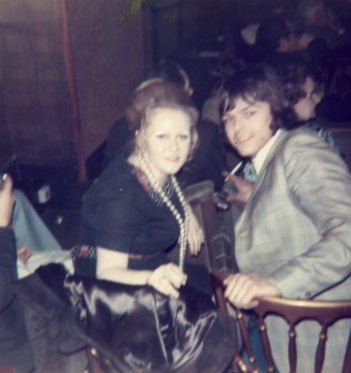
I remember a time when Dorothy put on a concert in Leicester. I travelled there on the train with Jane. The concert was of course a great night. We were all seated round a table and I have a photo from this evening in which I can see Emily, Dorothy's niece, sitting at the table with myself and Jane plus two other guys who were known to us at the time.
The party after this show was good and Larry Grayson was there , walking around with a tray handing out glasses of champagne ! What a lovely man he was and such a good host at a party. We all had a great time and far too much to drink. On the train back I was so pissed that, when the train breaked, I rolled off the seat I was lying on and fell onto the floor in a complete stupor !
When we all arrived back in London, very late, we slept at John Lloyd's flat in Grays Inn Road. I can remember my sleeping place was on the floor in the hallway but, bearing in mind the amount of alcohol I had consumed, I really didn't care !
 Some
years late , and I am guessing this was around 1977 or 1978 , I was
travelling into west London on the M4 / A4 towards Hammersmith, in my van
which was loaded up with fruit and veg for the market stall that I in
Shepherds Bush. As I neared London I found there was a big queue of
traffic building up on the motorway which was unusual . We were on the
flyover at Chiswick and as I neared the obstruction that was causing the
traffic hold up I spotted a car which had broken down on the outside lane.
Could it be ?....yes there it was , that big American Limo that I had
travelled back from Wales in with Dot Squires!
Some
years late , and I am guessing this was around 1977 or 1978 , I was
travelling into west London on the M4 / A4 towards Hammersmith, in my van
which was loaded up with fruit and veg for the market stall that I in
Shepherds Bush. As I neared London I found there was a big queue of
traffic building up on the motorway which was unusual . We were on the
flyover at Chiswick and as I neared the obstruction that was causing the
traffic hold up I spotted a car which had broken down on the outside lane.
Could it be ?....yes there it was , that big American Limo that I had
travelled back from Wales in with Dot Squires!
I pulled up behind the car, and the accompanying police car, and quickly found Dorothy who was somewhat agitated to say the least. Her car had broken down and apparently she had only just got it back from the garage after having work done. I cannot repeat what she called the garage owner, but the air was blue that morning !
A phone call had been made to the breakdown service and the police were soon on the scene to help direct the traffic that had built up. Once the breakdown truck had arrived I offered Dorothy a lift into town. She had an appointment with a solicitor that morning and needed to get into the West End. Dorothy, as you can imagine, was dressed up to the nines in high boots and fur coat . She looked a million dollars so it was quite an extraordinary sight to see her climbing up into the cab of my dirty old van full of fruit and vegetables and travelling into town in this. It was a bit of a squash as there were three of us then in the front , but we got there !
I dropped Dorothy off at Lancaster Gate that morning and I remember she nearly went arse upwards as she got out because it was so high and she was so short. I remember she promised to send me some tickets for her next concert as a “ Thank You “ but I don't recall if she ever did ! .
I continued to go to all of Dots concerts and attend her after-show parties. Alas they were not all great affairs and some were a bit tame in comparison to her earlier ones. I recall when she did a concert at the Lewisham Odeon she returned to the auditorium after the show to lambast the lighting engineers as some of the lighting arrangements got a bit cocked up during the show. She was absolutely livid about this and I could hear here vocalising her complaints in her own style and language to the engineers at the front of the auditorium. Unfortunately that left all her fans waiting upstairs for her to make an entrance for the after show party.
 Unfortunately
for Dot, and what she wouldn't have known at that time, was that she was
going to be invited to open a new “ Odeon “ cinema later that year.
However, according to a close friend of mine at that time, because of the
commotion caused that evening after the show , they decided not to forward
the invitation and engaged someone else to do this instead. Such a shame
really but then sometimes Dot did make quite a fuss when things went
wrong.
Unfortunately
for Dot, and what she wouldn't have known at that time, was that she was
going to be invited to open a new “ Odeon “ cinema later that year.
However, according to a close friend of mine at that time, because of the
commotion caused that evening after the show , they decided not to forward
the invitation and engaged someone else to do this instead. Such a shame
really but then sometimes Dot did make quite a fuss when things went
wrong.
Regretfully, I never saw Dot in her later years and after she moved to Bray. I had planned to visit her there but somehow my personal life took a different direction and time moved on. I did try and keep up with whatever she was doing and attended all her concerts except the very last , which was in Brighton. I think in her latter years she was having more difficulty with her voice but her audiences were still just as adoring and supportive of her.
Having read what I have about her tendency towards litigation in her final years, I think it an awful shame that she had lost all her former wealth and felt she needed to take the route she did, eventually destroying what had been a wonderful lifestyle. I guess she just lost her way but, nevertheless, she left a lot of people with some really wonderful memories. For that alone we should always be grateful that she touched our lives in the inimitable way she did.
GOD REST HER SOUL.

Smiles for the camera from Tommy Steele, Dorothy, Liberace and Roger Moore
at a showbusiness event.
Courtesy of the Burtey Fenn Collection

Richard Stirling is a multi-talented actor/writer whose impressive credentials include penning Julie Andrews: An Intimate Biography (which was a Sunday Times Top 10 best-seller), the stage adaptation of Ivor Novello’s Gay’s The Word which is being revived in 2013, and writing Over My Shoulder, a stage production about the late, great Jessie Matthews, which played in London’s West End and has also toured around the country. Other Stirling productions include Tom Foolery (which also played Edinburgh) and Cowardy Custard.
In addition Richard has written feature articles for publications including The London Evening Standard, Harpers & Queen, The Scotsman, The Lady and Hello! To cap it all, as an actor he has appeared often on film and television, and on the London and American stage, most recently in Charles Dickens’ The Mystery Of Edwin Drood which recently completed a run at the prestigious Arts Theatre near London’s Leicester Square.
Richard Stirling has turned his creative attentions to a new stage production, Dorothy Squires Mrs. Roger Moore – starring Al Pillay of Channel 4 Comic Strip success – which attracted considerable plaudits from both media critics and the public alike at its recent opening run at the White Bear Theatre in Kennington, south London. The Evergreen Theatrical Productions show transfers to the Edinburgh Fringe Festival where it will play at the Gilded Balloon between Sunday 12 August and Monday 27 August, at 12.45pm each day (box office: 0131 622 6552 or www.gildedballoon.co.uk ).
Richard Stirling never met Dorothy, or saw any of her stage performances, but admits that when he started researching her life story and career, he became totally fascinated by her both as a person and as a performer. "It’s almost like she had three different phases to her long career, which spanned the Thirties through to the Eighties, no mean achievement for any stage and recording artist. There were the early years, when she performed on stage with, and recorded the songs of, Billy Reid and had big successes with songs like The Gypsy, It’s A Pity To Say Goodbye, Tree In A Meadow, Safe In My Arms, Coming Home and Mother’s Day.
"Then there was the long period during the Fifties when she was married to Roger Moore and took more of a back-seat in show business, while his own career was beginning to take off, although she continued to make records during the decade and began to develop her ‘belting style’. And of course there were the wilderness years of the Sixties, when her marriage to Roger had broken up and she became embroiled in endless litigation, followed by the big London Palladium comeback of 1970 which witnessed her back in the charts and filling theatres and clubs around the UK throughout the decade. By then Dorothy was also writing many of the songs that she recorded, as well as covering the great pop standards of the day."
Al Pillay’s many credits include The Comic Strip and Channel 4’s first ‘yoof’ programme Whatever You Want (with Keith Allen, pop singer Lily’s dad) and Four For Tonight with Ruby Wax. Some eyebrows have been raised in the entertainment world by the fact that a male is depicting Dorothy in the show, but Richard Stirling explains: "In some ways Dorothy was not gender specific, as when she used to perform My Way, which was essentially a man’s song but which she made her very own. It was the same with other songs that she performed – even if you knew nothing about Dorothy Squires either as a performer or a person, it was all there in her songs. Her life was in the songs and the songs were in her life."
Appearing alongside Al Pillay in Dorothy Squires Mrs Roger Moore are Austin Staton (who depicts Moore), Adam Anderson, James Doughty and Chris Palmer. Direction and musical staging is by Stewart Nicholls with Ben Stock as musical director and vocal arranger, and Tony Osborne responsible for the arrangements (ironically he is no relation to the late Tony Osborne who arranged many of Dorothy’s recordings including Say It With Flowers). Lighting designer is Phil S. Hunter.
Richard Stirling adds: "Dorothy Squires was a terrific stage performer, and she was arguably the first singing ‘diva’. Sadly she is not remembered now, as she deservedly should be, because many of her original fans have now died and today’s younger generation were not even born when she was having her ‘comeback’ years. I hope that Dorothy Squires Mrs Roger Moore will do something to redress the situation as she deserves to be remembered and acknowledged for her terrific singing and performing talents."

Austin Staton as Roger Moore and Al Pillay as Dorothy Squires
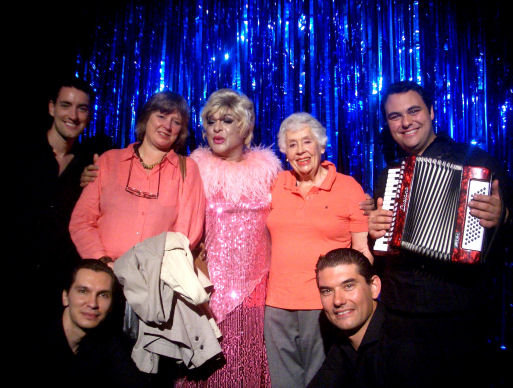
Billy Reid’s daughter and granddaughters were among the many visitors to see the Evergreen Theatrical Productions staging of Dorothy Squires: Mrs Roger Moore at the Gilded Balloon venue, which was part of the 2012 Edinburgh Fringe. The show had previously enjoyed great success at the White Bear Theatre in Kennington, South London.
Daughter Mrs Yvonne London, who lives in Edinburgh, and granddaughter Lisa Neep are pictured with cast members Al Pillay (portraying Dorothy), James Doughty (as Billy Reid), Austin Staton (Roger Moore), Adam Anderson and Chris Palmer. Mrs London revealed to author Richard Stirling that her personal favourite among her father’s many songs is I Still Believe (a number 1 hit for Ronnie Hilton in the early-50s) and that, interestingly, Mother’s Day is one of his songs that she doesn’t particularly care for.
Among the reviews of the show, Time Out magazine wrote: “In the Welsh diva Dorothy Squires – singer of The Gypsy, Say It With Flowers and My Way, wife of the 007-actor pre 007, queen of comebacks, lawsuits and white rabbit fur – Al Pillay has found an ideal vehicle. Unashamedly de trop in whiteface, pink chiffon and ostrich feathers, and backed by a chorus of four male singer-actor-dancers, the high-octane actor and musician portrays Squires’ journey from the valleys to the Palladium, from Hollywood to bust, as a compelling combination of ambition, defiance, self-defence, self-delusion and spitting fury.”
Audience reviews included “This was amazing and very moving, we loved it” from Avril Cairns, while Gerald Gallagher commented: “Excellent show! Al Pillay and company do a fine job of documenting the troubled life of a great star. An informative hour of great music and drama. We all loved it.”
And talking of plays about Dorothy … Johnny Tudor writes to say: “Just to keep you in the loop about the drama I’ve written on Dorothy’s life. It goes into rehearsal on the 15th April 2012 at the Sherman Theatre in Cardiff where it will play for two weeks, followed by a tour. As soon as I have the tour dates, I’ll let you know.”
HOWARD BARROW
Howard Barrow was the studio sound engineer on various recording sessions for Dorothy Squires including for her 1970 London Palladium concert, which was issued as a double-LP by President Records soon after the event, and also for her 1971 Palladium concert (also issued on record), as well as for the hit single My Way which spent six months in the Top 50 in 1970.
Today, several decades later, Howard still remembers Dorothy with affection, saying: "There was no such thing as a closed door for Dorothy, like the time when she first decided to hire the Palladium and went to Louis Benjamin, the head of Moss Empires who owned the famous theatre. Dorothy cajoled him into letting her have the theatre on one Sunday evening in early December 1970. Nobody believed that she would actually go through with it, but she did - and, of course, that comeback evening back part of British show business history, with Dorothy selling out the theatre within hours of the tickets going on sale."
Howard adds: "During the run up to the concert, Dorothy was an absolute ogre at times – but she gave the performance of a lifetime. The one person she totally respected was Nicky Welsh, her musical arranger and conductor, who accompanied at many of those concerts in the 70s. Of course they had their arguments and disagreements but, when it came to the music, Dorothy had total faith in Nick. His word went."
Howard recalls that Dorothy "beat everybody into submission". At one point she was signed to Pye Records (who released the Theatre Royal, Drury Lane double-album in 1974, Cheese & Wine, featuring duets with Dennis Lotis, plus the single The Impossible Dream, also all engineered by Howard). "She’d come into the ATV offices and Benji (as Louis Benjamin was known affectionately to those who worked with him) and (Lord) Lou Grade would, I swear, hide behind their desks when they knew she was around. Anything to avoid a confrontation! She was like an express train coming towards you."
Before becoming house engineer at the Pye recording studios near Marble Arch, Howard Barrow had previously worked for IBC Studios in Great Portland Street, W.1 (near to the BBC’s Broadcasting House) and as a freelancer. The many (diverse) acts he engineered for in the studios included The Kinks, Georgie Fame, Mungo Jerry, Johnny Ray and Danny La Rue. "I was still very young when I went to Pye, and I actually volunteered to be the engineer for the recording of the London Palladium comeback concert, and also at her concert the following year as well. Dorothy actually name-checks me on that first recording – she’d started singing a medley of songs on the Palladium stage, faltered, and then said ‘We’ve got to go through all that again – Howard’s got to get it in the sound box’."
Howard remembers the session when Dorothy recorded the Frank Sinatra anthem My Way. "Nicky Welsh was of course supervising the session, and in fact there were relatively few musicians on the session, just a small string section really, with Johnny Gray on tenor saxophone, and of course drums. Such was Nicky’s musical talents that he made the orchestra sound so much bigger than it actually was, and the end result sounded like a million dollars. Dorothy, of course, had a huge hit with My Way, despite the fact that Sinatra was still in the charts with his recording, and it went on to become her personal anthem and theme music."
On the more personal side of their working relationship, Howard says: "She’d come in to ATV House one day to see Louis Benjamin, and asked if I’d mind parking her Cadillac in the small car park underneath the offices, as she was running late. I said ‘no problem’ and, while doing it, had a problem with the clutch, and ended up driving into the garage wall. I managed to give the car’s grill a right old clobbering. I was dreading Dorothy seeing the state her Cadillac was in but, when she did, she said nothing – and never mentioned it in the future. Dorothy could be a right old bat when she wanted to be, but she was all heart really … and she would do anything for anybody. I certainly wouldn’t have missed out on the experience of working with her in the studios."
Thanks for those great memories, Howard
|
Douglas Darnell R.I.P. Douglas Darnell, the renowned couturier, who designed stage gowns for Dorothy Squires, Shirley Bassey, Joan Collins, Dusty Springfield, Marlene Dietrich, Petula Clark, the Beverley Sisters, the Kaye Sisters, and Danny La Rue (in his earlier performing years), among others, died peacefully in his sleep at his home in north west London on 25 April 2012. Doug, who shared his home and life with his sister Linda, had spent the previous day entertaining friends and family, and shown no signs of ill-health. Doug was born on 15 August 1933 and started his dress-making career as a window dresser for Selfridges among other stores. Later he worked briefly for the Queen’s couturier Sir Norman Hartnell before embarking upon his own successful dress designing career. Doug designed many of Shirley Bassey’s stunning stage gowns – including for her appearances at London’s Talk of the Town in 1970, and for the cover of her classic Something album of the same year– and was also responsible for the ostrich feather-trimmed gown that Dorothy Squires wore at her 1970 London Palladium comeback concert. Doug subsequently designed outfits for Dorothy’s 1971 and 1972 Palladium concerts, as well as for her Theatre Royal, Drury Lane, concert in 1973. The two enjoyed a warm friendship and Doug was often the butt of Dorothy’s wicked sense of humour, being name checked on at least a couple of her live recordings. Doug’s funeral was held at the West London Crematorium, Kensal Green, on 17 May 2012 and attracted a "full house" and over 50 floral tributes. His niece delivered the Eulogy, while a second touching tribute, from Robert Foxall and Nigel Lowrie – long-time friends, who were unable to be there in person as they were working abroad – was read out by the presiding minister. Afterwards a reception was held at Mike’s Cafe in Blenheim Crescent, just off Portobello Road, close to where Doug had been brought up.
Robert Foxall, who got to know Douglas Darnell very well during his later years, wrote the following obituary which appeared in the Daily Telegraph
|

|
Al Pillay is starring as Dorothy in a musical play, Dorothy Squires – Mrs Roger Moore, at The White Bear Theatre (www.whitebeartheatre,co,uk) in Kennington, south London, 6-16 June 2012. The production will then move on to the Edinburgh Festival Fringe where it will play at the Guided Balloon, 12-27 August (www.gildedballoon.co.uk). Presented by Evergreen Theatrical Productions, Dorothy Squires – Mrs Roger Moore will be directed and choreographed by Stewart Nicholls whose previous work has included Ivor Novello’s Gays The Words, Over My Shoulder (based on the story of Jessie Matthews) and Cowardy Custard. The author is Richard Stirling, who wrote Over My Shoulder and penned the best-selling book biography Julie Andrews: An Intimate Biography. Al Pillay, who has written
for this website, starred in Channel 4’s The Comic Strip, Whatever You
Want (with Keith Allen), and most recently he appeared onstage in
Manhattan in the autobiographical play, Glitter & Twisted. |
|


|
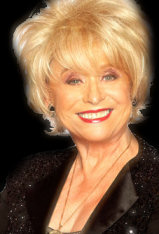
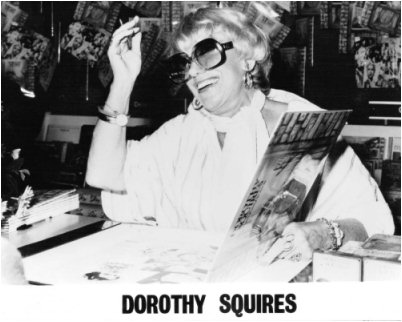
Actor Sir Roger Moore, 84, will no doubt raise a trademark quizzical eyebrow at the news that his turbulent second marriage to the late Welsh diva Dorothy Squires, pictured, is to become the subject of a musical at the White Bear Theatre, Kennington, South London, in which Squires, a gay icon, will be portrayed by a man. Taking the lead will be Al Pillay, 52, star of Channel 4’s Comic Strip Presents, who has been described as a ‘one-time transsexual disco diva, transgressive being, maverick soul’. What a range! |
|

With thanks to Mark Willerton, Burtey Fen Collection
ELDERJUICE
Elderjuice is an enterprising online magazine-format website aimed at the over-50s, covering many aspects of life today, including leisure, the arts, music, films, travel, money, health and general lifestyle. It lives up to its motif, “For people with a bit of life experience”.
Recent online issues of Elderjuice have included features about such legendary and perennial names as Anthony Newley, Daniel O’Donnell, and Stuart Sutcliffe who was one of the original Beatles, and the latest edition has an article about Dorothy Squires, entitled ‘The Voice’ Before Tom Jones – Dorothy Squires Remembered, which has been written by Chris White who is also the webmaster of this (Dorothy Squires) website.
Elderjuice’s Temple Melville says: “Among other things we want to bring back memories of real stars as opposed to celebrities. Reaction to the website from those who have seen it has been very positive.
Click on the link below for Elderjuice, and see for yourself what a great website it is, filling an essential niche for the older generation. You won’t be disappointed and will become a regular reader!
ELDERJUICE.COM
- 'THE VOICE' DOROTHY SQUIRES REMEMBERED
The ever-reliable Desmond Carrington featured Dorothy in one of his Radio 2 programmes, Icons of the 50s, broadcast in late March 2012. Des played two of Dorothy’s hits Tree In The Meadow and Say It With Flowers (with Russ Conway), and also included some interesting sound footage of Dorothy talking about her big London Palladium comeback. Desmond Carrington has always been a fantastic champion of Dorothy and her music. Over the years he has played the Irony of War medley in its complete entirety (during a Remembrance Sunday broadcast), three of her records consecutively, and also devoted a full half-hour programme to her. Thanks Des – I’m sure all Dorothy’s many fans appreciate you keeping her memory alive.
If popular cabaret and theatre pianist
Mike Terry is out there, his nephew in Canada would like to hear from him! Flamboyant Mike worked with Dorothy on many occasions, and was also a long-standing friend, having known her since the late 50s; he has recorded several albums over the years and often paid musical tribute to Dorothy, both in the recording studios and onstage. Wayne Smith recently contacted this website, writing: “I was a great fan of Dorothy’s, due to the musical influence of my uncle Mike Terry, and came across your website while doing some research. I wondered if anyone had any contact number for Mike – either phone or e-mail – as we lost contact several years ago and I would love to make contact with him again. I am now living in Canada with my wife Rita, having retired from the British Army. Any help you can give in enabling me to make contact with Mike would be greatly appreciated.
If anyone can help Wayne, please contact him at wayne.smith@telus.net or via this website
(chris@dorothysquires.co.uk)
Geoff Bowden of the British Music Hall Society – who is also editor of the respected Callboy magazine, aimed at professionals past and present who have worked in the entertainment industry – informs us that there are plans to stage a play about Dorothy Squires at the respected South London pub-theatre venue The White Bear in Kennington. Geoff has heard that auditions have recently taken place and that it will hopefully be staged in the near future. Thanks Geoff! More information as and when we get it!
Offshoremusicradio presenter Rod Collins, who has frequently played Dorothy’s records in his several-times-weekly programme (as well as providing several memories about her on this website), was touched to receive the following message from a listener, Phil (sorry – we don’t have a surname): “Thanks for doing the dedication for my partner. I always thought Dorothy Squires was one of the finest female singers of her generation and – for my money – head and shoulders above the 60s girls. You are one of the few that still plays her, so thanks for that.”#
JOHNNY TUDOR PLAY
Johnny Tudor, the Welsh entertainer who supported Dorothy at her 1970 London Palladium comeback concert, is currently working on a stage production based on Dorothy’s eventful life, and there are plans for it to go into production by the end of 2012 or early next year.
Johnny – whose father was an old family friend of the Squires family, and who himself knew Dorothy from being an infant – has been commissioned by the Sherman Theatre in Cardiff to write the play – working title Say It With Flowers – with BAFTA winning playwright, Meic Povey. Johnny says: "The really good news is that the Sherman Theatre has recently received full funding from the Arts Council of Wales for a tour, which has basically given us the green light for production. The play will open in Cardiff and will be followed by a tour, with venues to be decided."
More information about Johnny Tudor’s stage production will follow as the project advances.
Longtime fan Stephen Richardson shares some of his London Palladium memories of Dorothy, along with several photographs taken at the time.
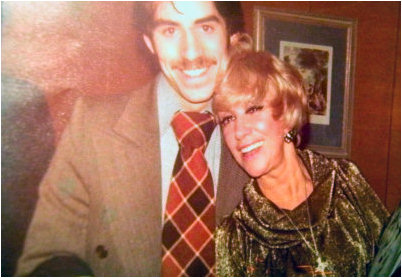
I have always been aware of Dorothy Squires, as my grandmother and mother always loved her voice and they went to see her when she appeared in Sunderland.
I was passing the London Palladium in 1977 when I saw that Dorothy would be doing a show in the November. I went with a friend who was from Italy and after the show we went backstage. It was packed with fans and stars, and there was certainly plenty of drink available! I was not used to alcohol and so got a bit drunk!
My friend and I were cared for by some of the older fans, mostly gay men. I was only 18 and not out as a gay man then. After a while I think the backstage staff were getting rather fed up of us, and they told me that I was going in to Dot's dressing room. In fact it was the fire door, and we ended up in nearby Argyll Street!

I went mad and went back round to the stagedoor where there where many people waiting to see Dot. I went to the front of the queue and blagged my way back in to her dressing room! When I told Dorothy that my friend was from Italy she jokingly went mad, but my friend was very touchy and knew nothing about Roger Moore and the fact that he had left Dorothy for an Italian woman!
That was just one of many wonderful nights when I saw Dot onstage and went backstage afterwards. Now, when I am in London and pass by the Palladium, I always think of those nights and wish we could do it over again. In fact they were not shows but Events, never to be repeated by anyone.
Incidentally I see that Dorothy's former home in Bray, Berkshire - which was once the residence of Edward VII's mistress Lily Langry - recently sold for over £3 million. Not a bad profit over the years!

Thanks for sharing this with us, Stephen, and also for the photos.
Well-known London cabaret performer Al Pillay has been a long time fan of Dorothy’s. Al writes:
 "The very first time I
became aware of Dorothy Squires was as a teenager, watching her performing
in a baby blue ostrich-plumed sparkly stage outfit, on the Reg Varney show
I’m sure, sometime back in the 70s. It looked as though she swam her way
through a myriad of sheer stage curtains to reach the microphone and then
belt out Happy Heart, followed by My Way which she appeared to bite chunks
out. From that moment on I became her youngest fan.
"The very first time I
became aware of Dorothy Squires was as a teenager, watching her performing
in a baby blue ostrich-plumed sparkly stage outfit, on the Reg Varney show
I’m sure, sometime back in the 70s. It looked as though she swam her way
through a myriad of sheer stage curtains to reach the microphone and then
belt out Happy Heart, followed by My Way which she appeared to bite chunks
out. From that moment on I became her youngest fan.
I was about 14 years old and said to my Mam, ‘Ooh, she is like a white Shirley Bassey’, and my Aunt Jean who was also in the living room at the time, chirped up: ‘Excuse me!! GET IT RIGHT. SQUIRES WAS THE PROTOTYPE - NOT SHIRLEY BASSEY WHO WAVES HER ARMS AROUND LIKE SHE’S DEMENTED.’
I think my Aunt Jean would have done well as a judge on X Factor where of course today Dot would never get a look-in as a contestant as there was nothing identikit or generic about her as an artiste, and as a judge I am sure that she would have given other contestants hell. Just as I did with my brothers who would say only queers liked Dorothy Squires, to which I’d reply that there must be some great benefits to being a queer then, before I knocked them out! I hastily add we must never pride ourselves on being violent but, like Dorothy, nor must we tolerate disrespect either.
I first met Dorothy when I went backstage at the Theatre Royal, Drury Lane, with pianist Mike Terry. I remember during the show I was sat next to the wonderful singer/songwriter Labi Siffre, famous for his hit Something Inside So Strong, which could easily have applied to Dorothy because, believe me, she was certainly so strong, ‘may I say’! She oozed power, strength and total determination and that particular concert was incredible. She was a force to be reckoned with and, to this day, I believe Dorothy to be one of the greatest performers of the 20th century, right up there with Lena Horne, Judy Garland, Eartha Kitt and Peggy Lee.
Dorothy sent me a message once, via Danny La Rue, saying that she was so glad to see me doing well and enjoyed my regular appearances in the ground-breaking Channel 4 TV series The Comic Strips Presents. She thought that I was the one who stood out, and said I was unique. Imagine, Dorothy Squires saying that about me, an insecure lad from Grimsby docks. I was made up, if not just for the fact and knowledge that Dorothy was really hip and well-clued. In fact I always enjoyed Dorothy’s Pans People arm gestures when doing an up-tempo pop tune. She really could sell a number!
Thanks Al for your memories. I think that the TV show which you recall for first seeing Dorothy perform was ATV’s Saturday Variety in early 1972 when she performed Happy Heart, Till and My Way – her first major TV booking in over a decade. That particular show was also notable for establishing Dorothy’s long-time friend Larry Grayson as the proverbial ‘overnight star’. Larry had originally played on one of Dorothy’s bills at Chiswick Empire back in the 50s! Dorothy did appear on the Reg Varney Show performing If I Could Go Back (from the movie The Lost Horizon).
Al has been a popular live attraction in London and further afield, with his unique brand of comedy, and has also appeared on many cutting-edge TV comedy shows. He has a CD album available featuring the live recording A Life In Song, and has also created the Demented Divas greetings card series which feature wicked illustrations of Dorothy, Bette Davis and many other legendary divas. Well worth checking out. Look on the Dress Circle web site (www.dresscircle.co.uk)
Sir Roger Moore mentioned Dorothy several times in a Daily Mail interview, headlined I’m No Bond!, written by Rebecca Hardy and published on 2 December 2011.
Sir Roger was promoting his TV movie A Christmas Princess, and Ms Hardy wrote: “It’s all a long way from Roger’s humble beginnings as an only child in south London … he [eventually] went to RADA where he met his first wife Doorn Van Steyn, whom he married in 1946, but the marriage was a disaster largely due to a lack of money. It ended when he met the woman who was to become his second wife, the temperamental singer Dorothy Squires, who was 12 years his senior.
“They travelled together to New York where Roger’s fortunes as an actor changed. ‘In London I was one of a whole shoal of fish who looked a bit alike and spoke the same. In America I was a slightly different fish in the pond. I was spotted and signed by MGM. But I had no confidence at all. I was always nervous of looking a fool.
Dorothy was a gay icon in those days but Roger was, as he says now,’100 per cent heterosexual’ and left her after meeting Luisa, then a beautiful Italian actress, on the set of a low-budget French-Italian film, The Rape Of The Sabine Women. He’s said since that, had he had children with Dorothy (she suffered a series of miscarriages), he might have made a different decision. Indeed, he now deeply regrets the shabby way he treated his second wife. ‘Life is full of regret,’ he says. ‘Have you got 15 hours? I don’t have many regrets I talk about, but yes, I regret that.’
So much so that when Dorothy underwent surgery for bladder cancer in 1996, Roger picked up the bill. And at her funeral two years later a bouquet of purple tulips and lilies of the valley arrived with a card and the words, ‘I’ve said it with flowers’.
The article attracted a mixed response from readers of the on-line edition of the newspaper. Perhaps the most pertinent was from a Stephen Richardson who said: “He did leave his wife Dorothy Squires for Luisa who he then married, only to leave her for the neighbour! He has admitted he regrets the shabby way he treated Dorothy, but Luisa knew that he was married when they got together. What goes around come around. Luisa knows how Dorothy felt.”
| Hallmark Records has reissued a Dorothy CD Three Beautiful Words Of Love which originally appeared on the Conifer label back in the 80s, first as a vinyl LP and then as a CD. It includes many of Dorothy’s hits from The Gipsy through to Say It With Flowers in 1961. The newly-packaged collection is available from Amazon at a bargain price of little more than £2. Curiously, however, the track-listing is shorter than the original CD release, losing six tracks along the way, and is based on the vinyl LP release. A curious decision, but it’s always good to see Dorothy’s word being reissued. |
Emily Squires, Dorothy’s niece, has supplied the following photographs dating from Dorothy’s early years.
Emily explains: "The first photo is of Dorothy’s mother and father, Emily and Archie Squires, on a day’s outing. Dorothy would have been about three years old then. The next photo shows Dorothy with Candy Joe, the pet poodle, and next to that is a holiday photograph taken in Tenby, south Wales. Standing behind the deckchair is Dorothy’s sister Rene with her husband George, and Dorothy. Directly in front is my father Fred (Dorothy’s brother) and in front of him is Archie Squires. The rest of the people I know are family, but the names are lost. Maybe somebody out there in Wales may recognise a family member, in which case I’d love to hear from them. Shortly after this photo was taken Dorothy left Wales in search of stardom in the big city.
Emily adds: "The lady pictured on her own is Dorothy’s mum Emily, and it was probably taken during World War II, during which time my granddad served in Burma. The final photo is what looks like another family picnic, probably in Tenby again, with Dorothy, her parents, and her brother and sister."
Many thanks for allowing us to share these photos with you, Emily!
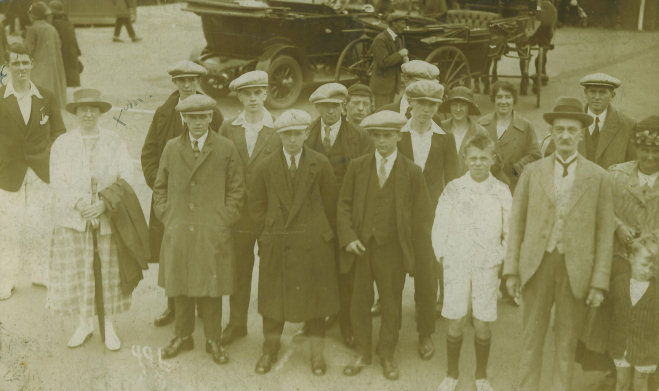


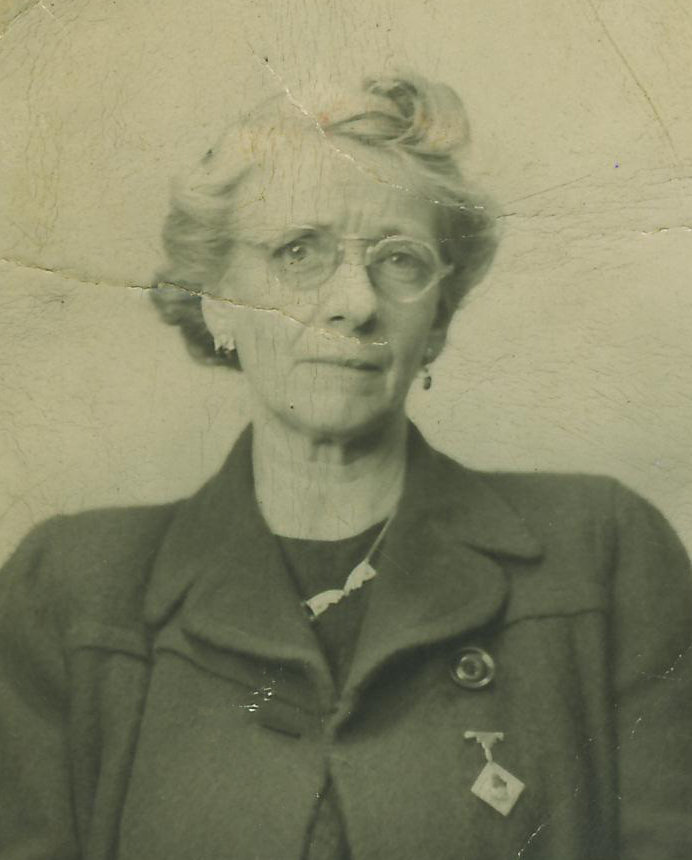
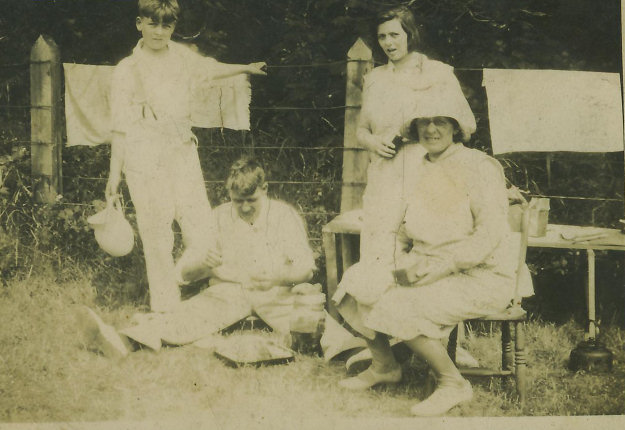
Adventures with Dot – By John Cohen
My friend Chris White has asked me to contribute to the Dorothy Squires website. He and I often saw her together, back in the 70s when we were both still very young!
In fact, I had always been totally devoted to Alma Cogan. Indeed, Chris first visited me as a schoolboy on 18 May 1968 (the day before what would have been Alma’s birthday) to view my vast collection of Alma Cogan memorabilia. At that time – remember that this was quite a while before her memorable ‘comeback’ -Dorothy Squires was one of those names who was slightly outside of my personal knowledge. As a boy, I was aware that she was a ‘name’ and I suppose that subconsciously I felt that here was a star of yesteryear who turned up on TV very occasionally, her glory days being over. I hadn’t the slightest idea of how major a star she had been and often wonder, when I hear the sweet-voiced ballads of her heyday, when she decided to switch to the often-raucous ‘belting’ style which thrilled us in the comeback years.
Alma had left a gap and, although they were extremely different in their singing styles, there was of course the huge similarity in the magic which Dorothy and Alma both produced onstage, and in the importance to both of them of the stage gowns. And so, with Dot’s much-publicised Palladium concert, we were intrigued enough to sample her for the first time on a wintry night in Halifax on 20 February 1971 ("direct from, and recreating, her Palladium triumph"). Dare one say, all these years later, that the whole comeback thing was obviously stage-managed. Clearly this was modelled on Judy Garland’s legendary comeback night. There were ‘plants’ in the Palladium audience. She probably organised most of the flowers herself! And isn’t it priceless when the man’s voice calling out ‘welcome back’ isn’t heard clearly enough, so she repeats it herself: ‘Did you hear what he said?’. But those concerts were magic; not concerts so much as ‘experiences’. Even the second of her two nights at the London Palladium in November 1975, when she had laryngitis and battled on as the voice became progressively weaker.
She had her failings. She talked too much! It always amazed me that, although she was professional to her fingertips, she didn’t know that the patter went on too long and often became ridiculous. At her opening night at the Golden Garter in Wythenshawe, Manchester (14 July 1975) all her stage chat was about how untidy her hair was, and she adjusted it with hair-clips between songs! On that earlier occasion In Halifax she was lamenting the half-filled auditorium. "I’ve lost a fortune. Never mind, I made a fortune last night". At St George’s Hall in Bradford (6 October 1979), the half-full hall was all the fault of the ‘inefficient box office’. And cruelly, at the same venue, she told us (at great length) how she had been welcomed and treated so well, and had been introduced to Eugene on lighting, to whom she gave a detailed list of all her requirements. He had been responsive and intelligent and then (her voice changed), "So far HE HASN’T GOT ONE OF THEM RIGHT"! If I’d been Eugene, I would have walked out there and then, and left her in her present ‘light’. It would have been worth losing my job!
Rather foolishly, and dangerously, at Wakefield Theatre Club on Saturday 12 August 1972 she found herself with a half-inattentive audience, which included her support act, the up-and-coming Cannon & Ball comedy duo. Those were the days when the gaming tables were in the same room as the cabaret, and there was noise from the back of the room. After pleading unsuccessfully for silence, she changed her approach by saying to her audience at the front of the room, "Please God, you’re trying to listen. Why don’t you tell them to be quiet?" The last time I saw her was at the Astoria dance hall in Roundhay, Leeds. I knew the compere and he told me that her opening statement when she arrived (they had positioned a balloon net above the dance/cabaret floor to help create a party atmosphere) had been: "Those buggers are coming down for a start".
Why did she always have to be so difficult, and to imagine insults where none were intended? There were her legendary battles with the BBC and record companies, and all those whom she imagined to be enemies. Although she seemed able to laugh at herself onstage, it seemed her sense of humour deserted her when she was offstage. At Batley Variety Club on 19 May 1972 (Alma’s birthday again!) I joked that "they haven’t stopped you driving then?", referring to her current publicity with the ‘traffic cops’. She changed immediately and snapped, "Why would they?" After her Astoria performance, I said that I was disappointed that she hadn’t included The Irony Of War and how much I enjoyed it. I was treated to a withering putdown of how large an orchestra she had at the Palladium, the clear implication being that only an idiot would have suggested that she perform with the considerably reduced orchestral backing she had that night.
As Marcia, an old friend of mine, with whom I was a Butlins redcoat, would have said many years ago (when we were talking about the artificial aspects of show business and ‘luvvies’ fawning over each other, "They seem to think that what they do is important"! You would have thought that Dot was making a contribution to the war effort that night at the Astoria; not discussing part of an evening’s entertainment!
Webmaster Chris White: I was with John on that particular occasion and, after that particular exchange, John turned to me and said "Tell Dorothy YOUR news, Chris". "What’s that?" Dorothy said, glaring at me ominously. I explained that I had been commissioned to write the liner-notes for a planned new LP release, Three Beautiful Words Of Love" to be released by a label called Conifer. She was not happy about it and snapped at me, "You’d better get your facts right"!
But don’t we miss her, and wouldn’t it be wonderful if we could go to another of her London Palladium concerts this autumn?
Many thanks John for this editorial contribution. I can say that it was John who first introduced me to the music and magic of Dorothy. At the time Dorothy’s version of Till was in the charts and receiving airplay on programmes like the BBC’s Family Favourites. "Every time I hear it I just have to sit down and listen because it’s such a fabulous version," John told me. I listened to his copy of Dorothy’s recording and was also won over. We both decided to go to the Halifax concert, and that was it – Dorothy had two more loyal fans!
 Incidentally,
apart from his long-standing love of the music and personality of Alma
Cogan (and Dorothy!), John is also a keen cinema fan and has written an
excellent coffee table style book, Lost Treasures Of The Odeons, which
features hundreds of films that graced the silver screen from the Thirties
through to the Sixties. Including personal reminiscences and anecdotes,
and reproductions of newspaper advertising for many of the movies in
question, the book was first published in 2007 but has now gone into a
second print edition which has almost twice the amount of content to be
found in the first. A real treat for film enthusiasts! Top West End
impresario Bill Kenwright, a renowned movie buff, liked Lost Treasures Of
The Odeons so much that he has even mentioned it on his Radio 2 evening
programme, and fellow broadcaster Paul O’Grady also gave the book a
great mention on his Sunday show!
Incidentally,
apart from his long-standing love of the music and personality of Alma
Cogan (and Dorothy!), John is also a keen cinema fan and has written an
excellent coffee table style book, Lost Treasures Of The Odeons, which
features hundreds of films that graced the silver screen from the Thirties
through to the Sixties. Including personal reminiscences and anecdotes,
and reproductions of newspaper advertising for many of the movies in
question, the book was first published in 2007 but has now gone into a
second print edition which has almost twice the amount of content to be
found in the first. A real treat for film enthusiasts! Top West End
impresario Bill Kenwright, a renowned movie buff, liked Lost Treasures Of
The Odeons so much that he has even mentioned it on his Radio 2 evening
programme, and fellow broadcaster Paul O’Grady also gave the book a
great mention on his Sunday show!
John’s book is available from Dress Circle in Monmouth Street, priced at £25.
~
Great to hear the highly respected lyricist Don Black (Born Free, Diamonds Are Forever and countless other hit songs) give Dorothy a mention on the Radio 2 Sunday show normally presented by Elaine Paige. Don mentioned that he had been a song plugger in his formative years and mentioned Denmark Street (Tin Pan Alley) and that singing stars like Dorothy often found their songs there. Dorothy of course recorded If I Never Sing Another Song, which Don penned the lyrics for, and also included an extract from another of his songs, When The World Is Ready, in her Irony Of War medley. It would be great if Don could play a Dorothy recording during his temporary tenure of the show – to my knowledge, Elaine Paige has never once, in ten years, played anything by Dorothy.
Dorothy was also mentioned by Jean Fergusson (Last Of The Summer Wine, Coronation Street) in Barbara Windsor’s Radio Two tribute show about Hylda Baker. Jean of course has written a well-received biography about Hylda, and also portrayed her in a West End stage show. She recalled that Dorothy, when talking about Hylda, and her personal problems, had once said: "I don’t think that Hylda realised just how good she was."
~
Bernie Burgess, the late lamented Ruby Murray’s husband in the Fifties and Sixties (and a member of the Jones Boys) gives Dorothy a couple of mentions in his biography, Ruby – My Precious Gem. Referring to the fact that Ruby had been exploited by certain show business people in her hey-day, he writes: "Artists like Frankie Vaughan understood what was happening. He was quoted as saying: ‘There were artists that were not receiving their true value,’ and he felt that Ruby was one of them. Another star name Dorothy Squires made it generally known that she had severe doubts about what could be happening to Ruby. The variety bills that she topped produced very high revenue, but very little of that came Ruby’s way."
Later in his book: "I always remember an old friend Dorothy Squires saying to me, ‘how can those four ******* (The Beatles) have so many hits with the rubbish they write. Within a few months Dorothy was recording cover versions of at least two of their song! That’s show business!"
The Wales on Sunday newspaper recently carried an item about Dorothy. The piece was also picked up by other newspapers around South Wales, and it also ran in The Daily Mail, accompanied by a small headshot picture of Dorothy.
Readers of the newspapers were informed: “Friends of the late Welsh singing star Dorothy Squires say she would be ‘laughing from the grave’ at the very public humbling of her old nemesis, Rupert Murdoch.
The entertainer and ex-wife of Roger Moore went to the grave blaming Murdock’s media empire for her financial ruin, after she launched dozens of costly legal battles against his newspapers. From being heralded one of the brightest stars Britain ever produced, she died in 1998 aged 83, ending her life a poverty-stricken recluse.
Last night, those who knew Dorothy said the star would be revelling in the storm engulfing the Australian media mogul’s empire. The star went head to head with the Murdoch-owned News of the World in 1971 in the first of two successful legal battles. The fiery singer sued Murdoch’s organisation over an article suggesting she had sold the intimate story of her married to 007 star Moore, when she hadn’t.
She also sued over an allegation that she had bribed a BBC radio producer to play her records on air, but a series of subsequent legal actions – as many as 28, and most unsuccessful – left her penniless. By 1982 she had been banned from the High Court and had spent much of her fortune on legal fees.
She ended up bankrupt and homeless, living in a horse-drawn caravan until she was offered a home in Trebanog, Rhondda by lifelong fan Esme Coles. In a BBC documentary, filmed only weeks before her death from cancer, she said: “I hold Rupert Murdoch entirely responsible.’ Last night Mrs Coles, now 74, said Murdoch’s appearance in the full glare of the public spotlight – culminating in last Tuesday’s grilling by MPs, during which he was pelted with a custard pie – would feel like justice to Dorothy. “Dorothy never forgave Rupert Murdoch for running a story about her selling tales about Roger Moore,” she said. “After that her life was never the same and she always said that the News of the World had been the start of her troubles.”
The 80-year-old mogul was forced to admit that he had been let down by people he trusted as he faced a barrage of questions about the saga which has rocked his empire and led to the closure of the News of the World a fortnight ago.
Dorothy, who had a love/hate relationship with the media, did however warm to one reporter on whose shoulder she cried. Dave Edwards, a retired Media Wales reporter, interviewed Dorothy during his time working for local radio. “Although Dorothy was known to have a hatred of the press I was lucky enough to get an interview with her in the studio of Swansea Sound radio station back in the 1980s,” he recalled. “She swore like a trooper and literally cried on my shoulder about the breakdown of her relationship with Roger Moore.
“We parted the best of pals – she even invited me to go with her to Swansea Market to feast on some faggots and peas.”
Dorothy was, of course, not living in a horse-drawn caravan towards the end of her life, but was reputed to have been born in one!
~
 Petula Clark was asked about Dorothy in an excellent in-depth interview that she gave to the Daeida Magazine which can be found on-line at daeida.com. Thanks to Theo Morgan for drawing this to our attention.
Petula was asked, Do you remember Dorothy Squires?
“Yes, of course I remember Dorothy Squires. We met several times. She was Welsh and I’m half Welsh so we got on well. I spent some time with her in Los Angeles when she was with Roger Moore as well. But I had known her before then and (Petula laughs) she was a very outgoing person, let’s put it that way! Very different from me but she was great fun and was an amazing singer. She was a diva before her time.
Artists like Dorothy Squires – who had a rather opposite voice and personality than you – do people like her attract you personally or professionally? You know, the more outgoing, boisterous, audacious types?
No, not really. Frankly it’s not that I don’t mix with people like that because I do mix with all kinds of people, and they’re all fine, but Dorothy was different. I got to know her well because we were in the same business and she was so famous – and so was I, and we used to meet at different parties. She was very much a ‘party animal’. That’s putting it mildly (Petula laughs). I wasn’t especially a party animal but I would go, you know.
How would you describe Dorothy Squires in a few words? What comes to mind immediately?
Fiery, on stage and off. Well, she was a fiery Welsh woman! She had an amazing voice, and she was so successful in the UK.
Would you say that she was larger than life?
Yes, very much so…
~
The Call Boy is the official journal of the British Music Hall Society, lovingly edited by Geoff Bowden and available on subscription. The autumn 2011 issue featured a lengthy memoir by Rosalyn Wilder who worked as personal assistant to the late Robert Nesbitt.
Robert Nesbitt presented many hit West End musical shows including those staged at the legendary Talk Of The Town nightclub back in its illustrious heyday, and he was also closely involved with the annual Royal Variety Show, working alongside Lord Bernard Delfont.
Among her reminiscences, Rosalyn recalls: “The scene is the Talk Of The Town late on Monday afternoon. Dorothy Squires is opening that night as the headline cabaret. Mr Nesbitt has spent the afternoon lighting her act. He clearly is not entirely happy and he goes up to her, puts his arm around her shoulder and says, ‘Dorothy darling, I really don’t think that song is the right choice for the act’. ‘Well,’ flounces Miss Squires, “I don’t care what you think, it stays in’. More persuasion from Mr. N.; more stubborn behaviour from the star. ‘Well, darling,’ says Mr. Nesbitt.”If you really must sing it may I suggest you sing it in the taxi on the way home?’!
~
Nice to hear the ever-loyal Desmond Carrington playing Dorothy’s Roses Of Picardy in one of his Radio 2 shows. More recently, he played Russ Conway’s solo interpretation of Say It With Flowers and mentioned that the song had been penned by Dorothy. Offshoremusicradio’s Rod Collins also continues to give Dorothy quite a lot of plays on the internet station, the most recent being I’ve Gotta Be Me from the first London Palladium concert. Rod says that he receives regular requests from listeners to feature recordings by Dorothy.
~
Eric Hall did Dorothy and her fans proud recently, virtually devoting the whole of his Sunday afternoon two-hour show on BBC Radio Essex to play her music. Your webmaster Chris White joined Eric to chat about Dorothy’s life and career and there were, of course, quite a lot of on-air phone calls from fans and listeners. There were too many Dorothy recordings featured to list here … suffice to say, Eric did play My Way, Till, For Once In My Life, I Am What I Am, Don’t Take Your Love From Me and many more. Thanks for keeping the Dorothy memories alive, Eric!
~
Kathy Kirby
 You
will all know the news by now of Kathy Kirby’s sad death on 19 May 2011.
For many years Kathy had lived quietly at her home in Kensington, West
London, turning her back completely on any proposed public appearances.
She was supported emotionally by her family, including her sister Pat, and
nieces, but received very few other visitors. One exception to this golden
rule was Mark Willerton of the Burtey Fen Collection, who had
known the reclusive Kathy for some three decades and often visited
her at her home, acting as a confidante, and enjoying listening to her
many show business reminiscences. It was Mark who arranged for Kathy to
pay tribute to Dorothy for this website - look under the Tributes section
- and he recalled an occasion when Kathy went one of Dorothy’s parties
in Bexley and a fight broken out between Dorothy and her sister, Rene, and
they had to be physically separated! On another occasion Dorothy and Lita
Roza went to see Kathy in concert in Brighton and, when Kathy started to
sing My Way, she whispered to Lita: “She’s singing my bloody song”!
You
will all know the news by now of Kathy Kirby’s sad death on 19 May 2011.
For many years Kathy had lived quietly at her home in Kensington, West
London, turning her back completely on any proposed public appearances.
She was supported emotionally by her family, including her sister Pat, and
nieces, but received very few other visitors. One exception to this golden
rule was Mark Willerton of the Burtey Fen Collection, who had
known the reclusive Kathy for some three decades and often visited
her at her home, acting as a confidante, and enjoying listening to her
many show business reminiscences. It was Mark who arranged for Kathy to
pay tribute to Dorothy for this website - look under the Tributes section
- and he recalled an occasion when Kathy went one of Dorothy’s parties
in Bexley and a fight broken out between Dorothy and her sister, Rene, and
they had to be physically separated! On another occasion Dorothy and Lita
Roza went to see Kathy in concert in Brighton and, when Kathy started to
sing My Way, she whispered to Lita: “She’s singing my bloody song”!
There’s no need to go into the career highlights of Kathy Kirby here - they have already been well-documented - but suffice to say, the ‘Golden Girl of British Pop’, as she was known back in the 60s, left behind a rich legacy of recordings for her fans to enjoy, and the memories of her outstanding musical talents will live on for many years to come.
~
The BBC Wales documentary Welsh Legends focused on some on some of the legendary names to emerge from the principality during the latter half of the 20th century, including Richard Burton, Sir Harry Secombe Shirley Bassey and actress Rachel Roberts (who, like Dorothy, was brought up in Llanelli). The series, first broadcast two years ago, kicked off with a special programme about Dorothy which included rare film footage as well as reminiscences from those who worked with and knew her. It also feature rare interview footage with Dorothy, recorded a few months before her death, and which never made the final edit of the Rain Rain Go Away TV documentary first broadcast in 1998. Such has been the appeal of the programme that it has since been broadcast several times by BBC Wales - most recently, in May 2011 - although sadly it has never been screened elsewhere around the country. Let’s hope that it eventually gets seen around the rest of the UK.
Tribute was also paid to Dorothy in early 2011 when BBC Radio Wales, ran a live feature about her and the plans to unveil a blue plaque in Trebanog. Presented by the popular Ray Noble, the 20-minute live segment featured both Dorothy’s niece, Emily Squires, and your webmaster Chris White, Emily reminiscing about her childhood (and adult) memories of her famous aunt, and yours truly chatting about her career. Two recordings were featured: Dorothy’s 50s recording of Edith Piaf’s If You Love Me (I Won’t Care) and 1953’s I’m Walking Behind You, her last collaboration with Billy Reid.
~
Steven Warner and Tim Hutton, who are responsible for the excellent design of this website (along with similar online ventures for Twiggy and Petula Clark fans), also have their own successful record label Stage Door Records, specialising in collectors’ soundtracks and theatre recordings. They recently released a previously unheard-of demo recording of Alma Cogan performing songs from Julie, a musical written by her pianist Stan Foster back in the early 60s, but which unfortunately never became a stage production.
Steven recently received an e-mail from Rupert James, who wrote: “May I say what a wonderful collection of rare gems you are providing with your releases. The clarity of the Shirley Bassey and Alma Cogan CDs are absolutely incredible. What a ‘find’ with the Alma Cogan and Stan Foster musical.
“I wonder if there are any plans for a Dorothy Squires collection of archive/unreleased material? I have heard that some tapes exist of Dorothy’s self-penned musical Old Rowley and they would be wonderful to hear with such clarity. Any Squires recordings would be amazing and much appreciated by her still legion of fans, so please keep me posted!”
~
|
John
Lloyd Sorry to report that the indefatigable John Lloyd, probably Dorothy’s most loyal fan, and who lovingly ran her fan club for many years, has been suffering failing health and is now permanently resident in a North London nursing home. John - a former Daily Express sports reporter - had lived in central London’s Farringdon Road for many years but his failing health has resulted in his move to the nursing home where he will receive full-time care. No Dorothy Squires concert or event was complete without the presence of John who organised coach trips to take loyal fans wherever Dorothy was appearing around the country. His loyalties to Dorothy dated back over half a century - among his legion of memories was scrambling on his hands and knees, with other fans, looking for Dorothy’s wedding ring from Roger Moore after she took it off her finger and flung it across her dressing room at the Talk Of The Town nightclub in late 1961. The incident happened after her actor husband turned up at the club to tell her their marriage was over. John was also mentioned in song on stage at the Dominion Theatre when Dorothy added the line, ‘John Lloyd the name of the game’ in her opening song A Lovely Way To Spend An Evening. I have had many e-mails from Dorothy fans asking after John and, while he is unable to use the phone himself, he can be contacted at Pembroke Room 10, Lansdowne Care Home, Claremont Road, Cricklewood London NN2 1TU (tel. 020 8830 8444). We’re all thinking of you John, and wishing you well.
|
~
Adele is the latest young British female performer to take the pop world by storm. Her second album has topped the charts for a record breaking period of time, while her debut album was simultaneously number2! It sounds unlikely but, according to a Daily Express story, she is a big fan of Dorothy Squires’ music - even though Adele herself is only 21 years old! If true, it’s a great tribute to the Welsh singing diva from one of our brightest new singing and song writing talents!
~
Dorothy received so little BBC radio airplay nowadays that it is always a special event when she does get a rare ‘plug’. However veteran presenters Desmond Carrington and David Jacobs have both played her in recent months. Desmond played Dorothy on his Armistice Day programme and David Jacobs featured It’s A Pity To Say Goodbye, after playing a version of the Billy Reid classic song by Ella Fitzgerald a couple of weeks earlier. David repeated his classic mistake of saying that Dorothy had been MARRIED to Billy Reid. They, of course, lived and worked together, for several years but because of Reid’s personal family circumstances they never actually tied the knot.
~
The same song was also featured on Paul O’Grady’s Sunday Radio 2 programme, (albeit it presented by Jodie Prenger of Oliver! TV and stage success, playing the role of Nancy), that particular week. Paul also mentions Dorothy in The Devil Rides Out, the second volume of his memoirs, in the context of one of his fellow drag performers often impersonating Dorothy’s stage act during his own early years as Lily Savage, playing the gay pubs of South London.
~
Dorothy was also mentioned briefly in a Radio 4 documentary to mark the centenary of the world famous London Palladium. One of the participants recalled the formidable Cissie Williams who was the Moss Empire ‘booker’ for many years. The legendary Cissie - feared by artists and managements alike - was renowned for always getting her own way and, when asked if anyone had ever succeeded in getting one over her, replied: “Yes … Dorothy Squires”! In a TV equivalent of the Palladium’s history Dorothy was heard very briefly at the beginning of the programme (though not seen), talking of the magic of appearing onstage there.
~
Dorothy was mentioned in some of the obituaries for Tito Burns, the legendary show business agent, who died in August 2010 at the venerable age of 89. Burns started his career as a musician backs in the 40s, and worked and toured with Dorothy during the early 50s. In the 60s he moved on to look after the performing careers of Dusty Springfield and Cliff Richard among others, and later became a leading light at London Weekend Television.
~
Dorothy has been mentioned in several show business books recently. Former Coronation Street actor Mark Eden (who played the villain Alan Bradley and died under a Blackpool tram after pursuing Rita Fairclough!) gives her numerous mentions in his very readable memoirs A Journey - From No ‘Hope’ Street To Coronation Street (Troubador Publishing). Alan admits to having a romantic if rather stormy relation with Dorothy, and also mentions that he wrote several songs with her and Dorothy’s musical arranger Ernie Dunstall. He also recalls that he and his son went to Dorothy’s funeral but, unfortunately, went to the wrong Streatham cemetery and so missed the entire ceremony!
~
Another very readable book is David Bret’s Hurricane In Mink which chronicles the controversial life of the late Diana Dors. Diana and Dorothy were good friends for many years - Diana was staying with Dorothy and Roger Moore at their home in California when Dorothy took the phone call, and had to break the news, that Diana’s then-husband Dennis Hamilton had died suddenly, bring the curtain down on a tumultuous marriage. Dorothy also visited Diana in hospital just a couple of days before she died. David Bret’s book includes numerous references to their long and enduring friendship.
Incidentally David Bret, who is a prolific writer of show business biographies, has dedicated several of his books to Dorothy’s memory and has mentioned her in several other of his tomes, including his biographies about Mario Lanza, Edith Piaf, Morrissey and Doris Day.
~
Ebay is always a good source for Squires fans who are on the look-out for unusual memorabilia and features some interesting artefacts including posters and programmes. Two programmes for her mid-50s appearance at the Chiswick Empire in west London include an up-and-coming comedian called Peter Sellers on the bill (1955) while Larry Grayson - some 15 years before he shot to ’overnight’ fame - features on the other (1956). Other programmes have included Nottingham Empire and a 1953 bill with Hylda Baker, and a souvenir brochure for the London Coliseum dated Sunday 17 1946.
The latter raised funds for the Newsvendors Benevolent & Provident Institution and, apart from Dorothy and Billy Reid, also features Jack Warner, Tommy Handley, Morton Fraser and His Harmonic Rascals, Issy Bonn and Norman (’Over the Garden Wall’) Evans on the impressive bill. Another item listed The Russ Conway Show, which ran for two weeks in Weston-Super-Mare for two weeks in August 1962 with “Special Guest Star Dorothy Squires”.
DOROTHY
SQUIRES
THE VOICE OF THE BROKEN HEARTED
Coming Home 1936 - 1949
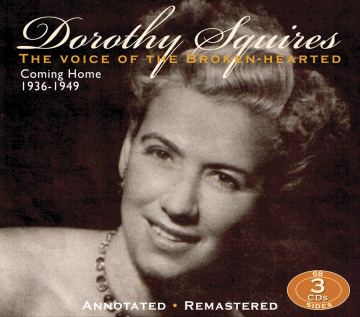
JSP Records has released an excellent triple-CD set of early Dorothy recordings which has been compiled by Theo Morgan who has previously put together collections by Shirley Bassey and Petula Clark among other artists. If this paricular collection sells well JSP will be issuing a second set, again compiled by Theo, which means that every recording she made during the Thirties, Forties and Fifties will be available on CD. Truly a marvellous tribute to Dorothy. Many thanks for your commendable efforts, Theo, whch will be much appreciated by her many fans.

The whole set is in chronological order, dating back to When the Poppies Bloom Again in December 1936. The idea first came about four years ago, amazingly. A label I was working for, Cherry Red, were interested in doing a Dorothy series. I had originally just suggested re-issuing the Pye material, licensed from Sanctuary, but they thought I should go back to the beginning and do a whole series. So I began researching Dot's discography, and when a friend sent me CDs of all the tracks, as taped off scratchy old 78s, I realised how brilliant her early stuff was. I had previously only known the few big hits of the period, like It's a Pity to Say Goodnight and I'll Close My Eyes. However, I hit several stumbling blocks with trying to find the discs to remaster from. By this point I had also decided to take the idea elsewhere, to JSP - a company reknowned for re-issuing vintage material in good quality as boxsets - a far more appealing idea than single CDs. So I set about buying the 78s and researching Dorothy, particularly her discography. A few kind people did indeed loan me their rare 78s, to whom I am incredibly grateful. As has happened before when I've done projects like this, I discovered a few things that were hitherto unknown. A couple of alternate versions of songs will therefore appear on Volume 2. When collecting the 78s, I also realised how rare they all were. They never turn up on ebay, and you tend not to see them at fairs etc. The rarest of the lot was a Columbia from 1950: Halfway to Heaven / Just Like a Gramophone Record. This was eventually found by Peter Rynston from Tall Order Mastering, who made the tracks sound as good as they do. Not only did Dorothy record some great songs in the 1940s (mainly thanks to Billy Reid), but it's also clear how important her role as a female singer was at the time. I firmly believe she was Britain's first diva of song, paving the way for Shirley Bassey. I therefore felt it essential to pay tribute by getting all these historic recordings re-issued properly. Yes, most of them have been out before, but scattered about on different collections, many out of print, and in varying quality. Now, for the first time, every one of Dot's commercial recordings from the start in 1936, to 1960 (before she signed to EMI again) will be available in two sets, chronologically and all remastered for the best sound possible. The first set, out on March 7th, covers 1936 to 1949. The second is also a 3CD set, covering 1950-60, which will be brought out sooner, depending on sales of the first set. So please all do your best to support this! - Theo Morgan
Dorothy
Memories June 2010
Ian Parsons has written a book on the history of Swansea Grand Theatre which is being launched at the South Wales venue in August 2010. Ian has been working on the book, Swansea’s Grand, for some time and has spoken to many people associated with the theatre and about its history. Dorothy Squires appeared there on 27 March 1967 and the book contains anecdotes about her. Ian’s website, which accompanies the book, has had more than 15,000 hits so far. There will be more information about Ian’s book later.
~
American actress, singer and TV star Dorothy Provine - best-known to British audiences for her 60s appearances in the TV series The Roarin’ Twenties, which gave her a hit single with Don’t Bring Lulu - died in May 2010. Back in the 50s Provine had a well-publicised romance (well, the United States anyway) with Roger Moore when he was filming the popular TV series The Alaskans with her and, of course, and at a time when he was still married to Dorothy (Squires). Dorothy (S) apparently guessed something was wrong in their marriage when Roger kept murmuring ‘Dorothy’ in his sleep - because he always referred to her as ‘Dot’, never Dorothy! The Times’ obituary on Provine noted: “Provine was a regular on TV, gaining her first TV series The Alaskans (1959-60), set during the Yukon gold rush of the 1890s. She played a saloon owner and singer, Rocky Shaw, who has attracted an adventurer, [played by] Roger Moore. The onscreen romance reflected the fact that Moore had fallen for Provine in real life, which almost caused a rift between him and his wife Dorothy Squires. Frank Sinatra then dated her for a while …”
~
Some
people have asked why Dorothy’s parents’ final resting place, very
near her own in Streatham Vale Cemetery, South London, has no headstone or
plaque. Emily Squires, Dorothy’s niece, explains: “After the 1987
hurricane a lot of graves and trees were damaged, so the cemetery tried to
inform my grandfather, who was the owner of the grave, to see if he wanted
it refurbished. Unfortunately my grandfather had died some years earlier,
and, without realising, the cemetery authorities sent the letter to him
care of St. Mary’s Mount in Bexley (Dorothy’s home for many years),
which had burned down in the70s. I didn’t know about this until
Dorothy’s funeral, when I went to look for my grandparents’ grave and
was then told by the cemetery office what had happened. I used to visit
the grave when I lived in London. Dorothy had not put granddad’s name on
the stone when he died in the early 60s and the only name on the headstone
was ‘Emily Squires‘ (my grandmother), which was a bit spooky for me to
see as it was also my name!”
Streatham Vale Cemetery is the final resting place for several other notable names in entertainment, including comedy film actor Will Hay, Lupino Lane (The Lambeth Walk), American pianist Charlie Kunz. Australian music hall performer Florrie Forde, big band leader Hal Swain, Ben Warriss of the comedy duo Jewell & Warriss, and music hall comedian Gus Elen. The ashes of TV magician and presenter David Nixon, and Wilfred Brambell (Steptoe & Son) are also buried there, albeit without name markers. There is a section alongside the crematorium dedicated to members of the music hall profession. Check out www.findagrave.com and type in Streatham Vale Cemetery for more information.
~
Gloria Hunniford interviewed Sir Roger Moore in her series Gloria’s Greats on the Biography Channel and he mentioned Dorothy several times - there was also a very short clip of the couple together, arriving at some function. Gloria admitted in a magazine interview to tie-in with the series: “Sir Roger talked very openly about areas of his married life we thought he would never mention. I had hoped we might get a little about this third wife Luisa but I thought I’d have to skirt over his second wife, Dorothy Squires, completely.
“In
fact he revealed how his first marriage to an ice-skater was already on
the rocks when he met the Welsh singer Dorothy Squires, who became wife
number two. ‘I met Dorothy at a party at her home. She introduced me to
a world that I’d never met before. … one couldn’t fail to be
impressed by her success. You know, to watch her perform and to see the
depth of her talent. It was quite extraordinary‘, he commented in the TV
interview.”
~
Mark Willerton, curator of the splendid Burtey Fen Collection, the popular music memorabilia museum run from his home near Spalding in Lincolnshire, and who also runs websites for Kathy Kirby and the late Lita Roza, recently interviewed early 60s Welsh hit singer and performer Maureen Evans for the magazine Best Of British. Maureen revealed that her late father had been a big fan of Dorothy’s and he was delighted when she (Dorothy) specially wrote a song for Maureen called Acapulco Mexico. Maureen recorded the song and it was released as a single by her record label Oriole in 1963.
~
The
Internet reveals an article which was published by the Los Angeles Times (articles.latimes.com)
about Dorothy when she died in 1998, and mentions the fact that she wrote
Tammy Tell Me True for the film of the same name, which was recorded by
Sandra Dee, star of the movie, and married to Bobby Darin at the time.
Percy Faith, the legendary American record musical arranger, supervised
the session in Los Angeles.
~
Al Pillay, one of the stars of The Comic Strip and who has appeared in films and on TV, is also a very talented artist and has designed a series of cards, Demented Divas, featuring some of the most recognised divas in show business, including Dorothy Squires. When he left school at the age of 15, Al went to live in Manchester where he hooked up with Northern drag legends Bunny Lewis and Frank Foo Foo Lammar. Al became a successful drag performer himself, taking off Dorothy, Shirley Bassey, Eartha Kitt, Lena Horne and Cleo Laine in his act, performing at the Sheffield Fiesta and Manchester Golden Garter clubs among other top Northern cabaret venues.
Al met Dorothy several times during the 80s and she apparently was a fan of his, watching his Comic Strip Presents … on Channel Four. He took off Dorothy and Shirley Bassey during one of his TV appearances. The Demented Divas card series was launched late in 2009 and, according to Al, Dorothy was the most popular selling image of the pre-Christmas season, with 30 cards in selling in one shop Dress Circle in |London’s West End in just a few days, and re-orders flowed in. Other ‘divas’ in the series include Joan Rivers, Carol Channing, Barbra Streisand, Eartha Kitt, Bette Davis (of course!), Mae West and Danny La Rue. Al says: “The series keeps the great show business personalities alive, in an age of fleeting, generic and all-too-fleeting types. Because of the popularity of the first Dorothy card image, I’m currently working on a new one inspired by her legendary Theatre Royal Drury Lane show, which will again be available at Dress Circle Records, the well-known theatrical shop in Monmouth Street, Covent Garden.”
A donation from all sales of the Demented Divas cards goes to the Kiss It Better charity at the legendary Ormond Street Children’s Hospital. The cards are available exclusively at the www.dresscircle.com website which also stocks the reissue of Al Pillay’s double CD A Life In Song, recorded at the Café de Paris, Piccadilly Circus, in 2007. The CD is also available on download on Itunes and Al can also be viewed on YouTube.
~
Ed Moreno was a popular radio DJ in the 60s and 70s and had a brief encounter with Dorothy Squires in 1970. Ed joined the fledgling Radio Caroline in 1964 and afterwards became programme director on Radio Invicta, the early sweet music station based on Red Sands Fort. He then joined Radio City and in 1967 became joint programme director of Radio 270 and stayed with the station almost until its close-down.
Ed was later involved in the initial planning for Radio Northsea International and his first show was aired on March 1 1970. His final show featured an interview with Dorothy Squires which was advertised as ’a live broadcast’ although it has long been believed that it was pre-recorded. Rodney Collins, a reporter for the popular music magazine Disc & Music Echo, says: “Dorothy Squires was due out to the boat for a live interview with Ed Moreno but it had also been decided to pre-record a stand-by interview in case of travel problems or bad weather. In the event the weather forecast was poor and Dot Squires decided against the journey. However, it continued to be billed as a live interview as it attracted a fair amount of pre-publicity.”
Terry Williams, a family friend of Dorothy Squires, adds to the story. “She did go to Holland to give the interview and was intending to visit the boat. However, the couple of days she had in Holland coincided with rough sea conditions and they could not take her to the ship, so she recorded the interview on land. She knew that her music was not the style of RNI but the mere fact that she could get her record played on the station, and that it would upset the BBC, was what made her do it! She had argued with somebody at the BBC and they refused to play her latest record [probably Till], although it was nothing to do with the ’payola’ scandal, which was a court case that she later won after being found innocent of the charges.”
Rod Collins, who has his own very popular music show on the internet station offshoremusicradio.com, and frequently plays Dorothy on his programmes (including such overlooked gems like Someone Other Than Me and Solitude‘s My Home), adds: “We’d billed Dorothy as broadcasting live and that’s what we intended to do … weather permitting. However, the forecast was dreadful (I was sick on the tender on the way out) so Ed and I travelled out to the radio ship with the stand-by tape. I don’t think anyone knew at the time it was a recording, and it was some years before rumours started to circulate about it all.
“Record Mirror was one of the music papers that gave Dorothy regular space. Peter Jones, the editor, had been a friend for years and I helped to set up the interview in the first place. It was one of two times I met Dot Squires. She was pleasant, very chatty, and very grateful for the newspaper publicity and the radio plays! For his part, Ed Moreno, who died in tragic circumstances some years ago, had one of THE best voices in radio. They are both sadly missed.”
~
Obituary:
Tony Osborne
Elsewhere on this website, Gary Osborne - a successful songwriter in his own right - writes of his childhood memories of Dorothy. His father was the musical arranger and composer Tony Osborne who worked with Dorothy, Shirley Bassey and Judy Garland among other musical legends. Tony had lived in retirement at his home in Australia (he emigrated there several years ago) and it is sad to report his death, albeit at the age of 87, in February 2009. Our commiserations go to Gary and his sister.
Tony Osborne played with the BBC Orchestra in the Fifties and later recorded Juke Box Jury, the original theme song for the popular BBC TV pop series. His musical arrangements for other artists included Shirley Bassey’s I (Who Have Nothing) and Gone (which he also composed), Petula Clark’s With All My Heart, Connie Francis’ Mama, and Gracie Fields’ Little Donkey. In 1969 Tony conducted the orchestra for Judy Garland’s final concerts which took place in Scandinavia. Tony also worked successfully with Alma Cogan, Eartha Kitt, Russ Conway, Gary Miller and Jimmy Young. He recorded with Dorothy on several occasions, including most notably Say It With Flowers and Blue Snowfall. An obituary in The Independent noted: “Tony Osborne was devoted to making music. He was a talented trumpeter and pianist, but he made his mark as a gifted arranger on many successful albums and singles during the 1950s and 60s. He was a consummate professional able to deal with prima donna antics from the likes of Shirley Bassey, Eartha Kitt and Dorothy Squires. ‘There’s no problem,’ he remarked. ‘You just talk back to them in the same language’.”
Also sad to report the death of TV actor Simon Oates, perhaps best remembered for his leading role playing Dr. John Ridge in the very popular BBC TV series Doomwatch in the early 70s. Simon will also be remembered by many Dorothy fans for being the compere at her historic comeback concert at the London Palladium in December 1970 and, of course, it is Simon’s voice that we hear on the live recording of the show, with the opening line … ‘I don’t know what you say about this young lady’. Ironically, Simon Oates was once rumoured to be in line to take over from Roger Moore as James Bond!
~
Obituary:
Danny La Rue
The legendary Danny La Rue died in June 2009 at the age of 81 after suffering failing health in recent years. However he had continued to make the occasional public appearances, speaking at the former editor of The Stage magazine Peter Hepple‘s memorial service at St. Paul’s, the actors church in Covent Garden, attending an 80th birthday tribute lunch for Lita Roza, and appearing on TV on the occasion of his 8oth birthday.
Danny’s long and dazzling career needs little recalling here. Suffice to say, he was Britain’s best-known - and highest-paid - female impersonator for more than three decades, with his own nightclub in London’s Hanover Square back in the 60s - which was a magnet for Royalty and celebrities - as well as starring in many West End shows.
Danny was a long-time friend of Dorothy Squires. I can recall interviewing him at Batley Variety Club in 1973 and they had already been friends for more than 20 years at that time. Danny frequently sent up Dorothy in his stage act, impersonating her singing Say It With Flowers in a hilarious segment, which he also performed in front of the late Queen Mother and Princess Margaret at the 1973 Royal Variety Show. Later. Danny recorded Dorothy’s composition for his EMI album, To Mother With Love.
Danny often attended Dorothy’s London concerts and I recall seeing him sitting in the Royal Box at the London Palladium with the late Dame Barbara Cartland, John Inman, and Norman Newell for one of her shows. Sad to think that they have all gone now. He also unveiled a plaque for Billy Reid in Southampton, again doing a gentle send-up of Dorothy, and he was one of the onscreen contributors to the BBC TV Wales documentary Rain Rain Go Away about Dorothy’s life.
Danny’s
funeral took place at London’s Kensal Rise and he is buried with his
late partner, Jack Hanson. Thanks for all the pleasure you gave to so many
over the years, Danny - and may you rest in peace.
John
Hartley, who knew Dorothy towards the close of her life, and attended
Danny’s funeral, writes a regular blog at Mothership Blog. This can be
accessed free by anyone. Scroll down to the Archives section on Mothership
Blog and look for June 2009, where you can read his account of Danny La
Rue’s Funeral; then refer to November 2009, where you can read his
controversial blog, Dame Shirley Bassey In Decline?
~
Dorothy continues to attract press attention some years after her death. In August 2009 she was the subject of a two-page spread in the Daily Express, headlined: “James Bond’s Wild Wife”. The article by a writer called York Membury started: “Dorothy Squires was the fiery singing star who was a big name long before the unknown actor she married called Roger Moore. And despite their bitter break-up, the 007 star’s special gesture (offering to pay for a plaque to be erected in her memory in Llanelli) shows he has never forgotten her”.
The article detailed Roger and Dorothy’s story marriage and included a large picture of the couple together in the 50s, as well as a glamorous shot of Dorothy in later life. Incidentally, Roger Moore read extensive extracts from his autobiography in a Radio 2 series, and Dorothy naturally was mentioned many times, generally in most affectionate terms. There is also a ‘talking book’ available of My Word Is My Bond, with Sir Roger once again narrating.
~
Patrick
Newley
Patrick Newley was a regular editorial contributor to The Stage magazine and for several years back in the 70s he also managed the inimitable Mrs Shufflewick (aka Rex Jamieson). Patrick wrote a couple of show business anecdotal books, including one about ’Shuff’, both of which mentioned Dorothy, relating humorous stories. Sadly Patrick Newley died in the summer of 2009, just several days after Danny La Rue who had been his father’s childhood friend (in fact, Patrick wrote the obituary for Danny which appeared in The Stage). A further irony was that just a year before Patrick had organised a tribute lunch for Lita Roza in Covent Garden at which Danny was a guest of honour.
In one of his Stage articles - published in the weekly Tabard column - Patrick recalled: “Lynda Lee-Potter [the noted Daily Mail columnist] ended up on the losing side of a war of words with the equally waspish and confrontational Dorothy Squires. When the singer spent £5,000 to become the first individual to hire the London Palladium, Lee-Potter wrote a typically subdued article under an equally typically subdued Daily Mail headline: ‘Don’t do it Dot! You can’t buy success!’.
Squires replied with a huge Get Well Soon card that read: ‘For once I fully agree with you! No one can buy success. |If they could, the millionaires would buy the lot - and keep it for themselves and their children and their children. I am paying for the chance to prove what I can do, having been in the charts three times in the last 18 months. Dear Lynda, you’ll have to pay black market prices to get in because my comeback sold out in a day.’
“And how right she was,” Patrick Newley noted. “Squires packed the Palladium for annual shows and earned her own season there [in July 1974]. Her only niece Emily Jane Squires sums it up: ‘Lynda Lee-Potter and my aunt Dot were two of a kind - colourful, controversial and top of the tree true professionals. Bless them both’.
Patrick
Newley related another hilarious story about Dorothy in The Stage. “The
volatile Dorothy Squires was no stranger to voicing her opinion. At the
end of her concerts, faithful fans normally showered the stage with
bouquets of flowers. I always thought these finales were rigged but on one
occasion I saw her in the 80s and not so much as a daisy chain graced the
stage. As La Squires, wearing a radio mic, angrily swept off into the
wings the entire audience heard her voice over the speakers shout:
‘Where’s the f****** flowers?’ You can’t beat that for protest.”
~
Many of Dorothy’s big-selling records were back in the 40s before the official pop chart was born (New Musical Express launched the first Top 10 based on actual record sales in November 1952), so she is often, perhaps unfairly, overlooked by chart historians. Her only official chart hits were I’m Walking Behind You in 1953, Say It With Flower with Russ Conway (1961), For Once In My Life (1969), and Till and My Way (both 1970). However the Guinness Book of Hit Singles has published a definitive list of Post-War Pop Hits, which were based on sheet music sales (the criteria before the launch of the chart based on actual record sales) and Dorothy features high. The Gypsy was number 1 in the listing in September 1945, with Dorothy and the Ink Spots both credited with performing the Billy Reid song, and remained at the top until the end of October. Another big success was A Tree In The Meadow, which was number 1 sheet music from February 5 1948 through to 22 April 1948. Both Dorothy and singer/pianist Leslie ’Hutch’ Hutchinson are credited with the hit versions of the Reid composition.
DOROTHY SQUIRES MEETS ROSEMARY SQUIRES
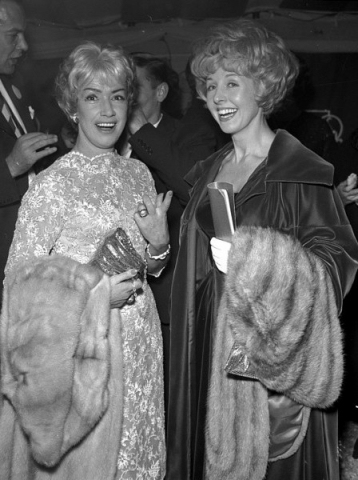
Dorothy meets Rosemary - the two Squires girls met up at a showbusiness function. Picture courtesy of Mark Willerton of the Burtey Fen Collection
Pontyberem’s
Famed Daughter:
Dorothy
Squires
By Keith Evans
(March 12, 2008)
In 1977
Melody Maker approached Dorothy Squires for her reaction, as a fan, to
the sudden death of ‘The King of Rock and Roll’. ‘Poor Elvis’ she
sighed ‘he was my greatest fan.’ Elvis Presley reputedly had a full
collection of her records, attended her American tours and asked her to
sing her hit single ‘My Mother.’
From 1945
‘Miss Squires’ was one of Britain’s most popular singers; by 1950
its highest paid. She beguiled capacity audiences, alternately belting out
songs with semaphore arm movements or gently realise subtle, poignant,
even tearful, refrains. But a torrent of emotional and legal setbacks
following her separation and divorce from Roger Moore preoccupied her
remaining thirty years. From millionairess to pauper: a modern Biblical
parable of rags to riches to rags.
Dorothy was born ‘Edna May’ on March 25, 1915, in a fairground van on a field now home to Pontyberem Primary School. Her parents, Archibald Squires and Emily (nee Rickets) respectively sprang from Rhondda and Gwendraeth families. Dot’s paternal grandmother ran a coconut shy stall. When the show moved on the Squires stayed in Pontyberem, initially with Dorothy’s uncle Bob, aunt Lanu and maternal grandmother at ‘San Domingo’ cottage – long since demolished.
Archibald
became a steel worker and moved the family to Dafen. On leaving school
‘Dot’ served in Woolworth’s before toiling in a Llanelli tin-plate
works; she bore scars on her forearms from this time. She revealed to
Vincent Kane in 1977 that her first paid performance (6d) was at 13
singing and playing the ukulele to Pontyberem miners. At 16 she sang on
stage at Llanelli’s Ritz Ballroom, later joining the Denza Players. A
year later she furtively left for London to live with a cousin and work as
a nurse while auditioning in for showbiz.
American
song writer Charlie Kunz saw her perform and arranged for her first radio
broadcast in December 1936. During 1938 Billy Reid, an English composer
and band-leader, left his wife and two daughters to devote himself to
Dorothy and her career. In 1945 he composed her first big hit song,
‘Coming Home.’ By the late 1940s, with an array of Reid songs,
including ‘The Gypsy’ and ‘Danger Ahead’, she outsold such
recording artists as Judy Garland and Peggy Lee. Living together in a
Bexley mansion, Dot and Billy jointly bought Llanelli’s Astoria Theatre.
Around this
time of austerity and rationing, as a pre-school infant, Saundra Storch,
whose parents Leonard and Donna Davies were publicans of Pontyberem’s
New Inn, received an unexpected gift from the superstar; an embroidered
cosmetic’s bag with a glittering compact, exquisite lipsticks and
toiletries.
When Squires
and Reid split up in 1951, after punching and kicking each other in the
Astoria bar (her father was hit in the face), he acquired the Llanelli
theatre while she took the Bexley mansion. Dot’s aunt and uncle, Lizzie
and Dai Walters of Bont’s Parcymynach, looked after the Kent mansion for
her.
Roger Moore,
then a struggling actor and catalogue model, entered Dot’s life in 1952
when attending one of her famed parties. July 1953 found them married by a
tipsy American minister in Jersey City; Moore was twelve years her junior.
Dot discovered she could never have children. She now did all to promote
her handsome husband’s US career, first with MGM then Warner Bros. The
couple, with a Hollywood home, worked and partied with ‘The Stars’,
including Gary Cooper, Elizabeth Taylor, Gene Kelly, Doris Day and Rock
Hudson. She was complimented for her singing by the legendary French
performer Edith Piaf. As the career of a future 007 heartthrob rose, with
eponymous leads in TV hits Ivanhoe and Maverick, Dot’s
career ebbed away.
On
occasions, with Roger Moore, she stayed with another Pontyberem aunt, Mrs
Clarke, of Maes Y Deri. Nearby a mutual friend and seamstress adjusted
Dorothy’s chic clothes - a mink coat being the most memorable item to
re-hem. Her costumes, flamboyant, gossamer, colourful, sequinned and edged
in ostrich feathers, were created by Dougie Donnell; dress designer to
other elite performers including Shirley Bassey and Dusty Springfield.
Despite
international celebrity, locals who knew the Squires family, treated the
singing star as ‘one of us’, but for some feigning shock at her
jewelled fingers and a gold ankle chain. She revisited many times after
Moore left her for an Italian actress, Latisa Mattioti, in 1961. In the
company of Dot’s pianist she rehearsed in her aunt’s parlour in Maes Y
Deri to the delight of Mrs Richard’s next door. An acquaintance told me,
‘Dot was welcoming and generous with her attention and hospitality to
family and friends in Pontyberem and Dafen.’
The year she
and the star of TVs Saint series parted, Dorothy re-entered the
charts, with popular pianist Russ Conway, singing her own composition,
‘Say It With Flowers.’ She cut here album ‘We’ll Keep A Welcome’
in 1966 before a choc-a-bloc audience at Llanelli’s Regal Cinema. In
1970 she proved her worth and trounced her critics in TV and radio
circles, by hiring and reaping sell out concerts at London’s Palladium
and Talk of the Town with a noted show at New York’s Carnegie Hall.
But
Pontyberem’s famed daughter was on a collision course with destiny.
Headlines from the period tell much: ‘Singer Dot Quits Over Rumpus at
Nightclub.’ ‘The Saint’s wife arrested at home.’ ‘Judge’s jail
warning to Dorothy Squires – fined £100 for kicking a taxi driver.’
‘Squires rude and offensive court told.’ ‘Miss Squires who is suing
the News of the World claims damages for alleged libel…admitted
she felt bitter at times towards Miss Mattioti ’I could have murdered
her if I could have caught her… Who wouldn’t?’ She was the other
woman… I was demented because my world had been cut from underneath
me’ ‘denied she was still bitter when Mr Moore married …at the time
that Miss Squires was acquitted of a breathalyser offence.’ Her wildfire
notoriety knew no boundary.
She launched
and paid dearly for 33 law suits, losing 30 of them. Dorothy sued in turn
such as screen actor Kenneth More for libel in 1968, prosecuted in turn in
1972 for kicking Bernard Bresslaw’s brother, 1973 accused of trying to
bribe an operative on BBC radio’s Two Way Family Favourites to
promote her records, in 1979 suing the intended publishers of her
autobiography for non-payment of serialisation in the Sunday People.
She launched so many prosecutions that a judge, in exasperation, dubbed
her ‘a vexatious litigant’ and forbade her further cases without prior
High Court permission.
To add to
her woes, in 1974 her under-insured Bexley home, a former residence of
Edward VII’s mistress, burnt down. Dot bought a mansion by a river; it
flooded. She was declared bankrupt in 1988; all her possessions, including
her jewels, were sold at public auction. She rented a cottage near
Pontefract, living as a recluse. In 1995, ill and destitute, she left
Yorkshire hours before bailiffs enacted a repossession order. Thanks to
Esme Cole, a fan and friend, in Trebanog she shared a rent free home for
the last three years of her life fighting cancer: A far cry from halcyon
days owning race horse winners, one of whom she spoke to in Welsh, and
hosting stars such as Cliff Richard, Tom Jones, Diana Dors, Tessie
O’Shea and her unlikely close friend, the comedian, Hilda Baker.
At her last
public concert in 1990, at the Brighton Dome, she forgot the opening
lyrics of a song. At its end she laughingly declared: ‘I told you I’d
balls it up!’
At
Cardiff’s BUPA Hospital in 1996 her £6,000 bill for cancer treatment
and surgery was paid for by Sir Roger Moore. In the late spring of 1998,
as she lay dying of lung cancer at Llwynpia Hospital, near Pontypridd, her
ex-spouse rang from UNICEF in n Sweden. Over the phone he told a niece to
say ‘Rog is thinking of you’, asking that Dot’s hand be squeezed for
him. When told Dorothy Squires said ‘Magic’ She died hours later on
April 14, aged 83. She is buried in Stretham Park cemetery, south London,
in the same grave as her brother, Captain Fred Squires, who died aged 37.
A decade on, her countless fans run an exceptional internet website. Re-releases of this Welsh diva’s musical triumphs by major international studios not only safeguards her legacy but points to a Dorothy Squires revival. Perhaps the time is near when Pontyberem marks itself out as the birthplace of Elvis’s favourite female singer.

Click on image to read
complete article
A plaque in Dorothy's memory was recently unveiled in Pontyberem, South Wales. Many thanks to Alec Jones for sending in the piece which appeared in the local Llanelli Star.
Dorothy Memories June 2010
Ian Parsons has written a book on the history of Swansea Grand Theatre which is being launched at the South Wales venue in August 2010. Ian has been working on the book, Swansea’s Grand, for some time and has spoken to many people associated with the theatre and about its history. Dorothy Squires appeared there on 27 March 1967 and the book contains anecdotes about her. Ian’s website, which accompanies the book, has had more than 15,000 hits so far. There will be more information about Ian’s book later.
American actress, singer and TV star Dorothy Provine - best-known to British audiences for her 60s appearances in the TV series The Roarin’ Twenties, which gave her a hit single with Don’t Bring Lulu - died in May 2010. Back in the 50s Provine had a well-publicised romance (well, the United States anyway) with Roger Moore when he was filming the popular TV series The Alaskans with her and, of course, and at a time when he was still married to Dorothy (Squires). Dorothy (S) apparently guessed something was wrong in their marriage when Roger kept murmuring ‘Dorothy’ in his sleep - because he always referred to her as ‘Dot’, never Dorothy! The Times’ obituary on Provine noted: “Provine was a regular on TV, gaining her first TV series The Alaskans (1959-60), set during the Yukon gold rush of the 1890s. She played a saloon owner and singer, Rocky Shaw, who has attracted an adventurer, [played by] Roger Moore. The onscreen romance reflected the fact that Moore had fallen for Provine in real life, which almost caused a rift between him and his wife Dorothy Squires. Frank Sinatra then dated her for a while …”
Some people have asked why Dorothy’s parents’ final resting place, very near her own in Streatham Vale Cemetery, South London, has no headstone or plaque. Emily Squires, Dorothy’s niece, explains: “After the 1987 hurricane a lot of graves and trees were damaged, so the cemetery tried to inform my grandfather, who was the owner of the grave, to see if he wanted it refurbished. Unfortunately my grandfather had died some years earlier, and, without realising, the cemetery authorities sent the letter to him care of St. Mary’s Mount in Bexley (Dorothy’s home for many years), which had burned down in the70s. I didn’t know about this until Dorothy’s funeral, when I went to look for my grandparents’ grave and was then told by the cemetery office what had happened. I used to visit the grave when I lived in London. Dorothy had not put granddad’s name on the stone when he died in the early 60s and the only name on the headstone was ‘Emily Squires‘ (my grandmother), which was a bit spooky for me to see as it was also my name!”
Streatham Vale Cemetery is the final resting place for several other notable names in entertainment, including comedy film actor Will Hay, Lupino Lane (The Lambeth Walk), American pianist Charlie Kunz. Australian music hall performer Florrie Forde, big band leader Hal Swain, Ben Warriss of the comedy duo Jewell & Warriss, and music hall comedian Gus Elen. The ashes of TV magician and presenter David Nixon, and Wilfred Brambell (Steptoe & Son) are also buried there, albeit without name markers. There is a section alongside the crematorium dedicated to members of the music hall profession. Check out www.findagrave.com and type in Streatham Vale Cemetery for more information.
Gloria Hunniford interviewed Sir Roger Moore in her series Gloria’s Greats on the Biography Channel and he mentioned Dorothy several times - there was also a very short clip of the couple together, arriving at some function. Gloria admitted in a magazine interview to tie-in with the series: “Sir Roger talked very openly about areas of his married life we thought he would never mention. I had hoped we might get a little about this third wife Luisa but I thought I’d have to skirt over his second wife, Dorothy Squires, completely.
“In fact he revealed how his first marriage to an ice-skater was already on the rocks when he met the Welsh singer Dorothy Squires, who became wife number two. ‘I met Dorothy at a party at her home. She introduced me to a world that I’d never met before. … one couldn’t fail to be impressed by her success. You know, to watch her perform and to see the depth of her talent. It was quite extraordinary‘, he commented in the TV interview.”
Mark Willerton, curator of the splendid Burtey Fen Collection, the popular music memorabilia museum run from his home near Spalding in Lincolnshire, and who also runs websites for Kathy Kirby and the late Lita Roza, recently interviewed early 60s Welsh hit singer and performer Maureen Evans for the magazine Best Of British. Maureen revealed that her late father had been a big fan of Dorothy’s and he was delighted when she (Dorothy) specially wrote a song for Maureen called Acapulco Mexico. Maureen recorded the song and it was released as a single by her record label Oriole in 1963.
The Internet reveals an article which was published by the Los Angeles Times (articles.latimes.com) about Dorothy when she died in 1988, and mentions the fact that she wrote Tammy Tell Me True for the film of the same name, which was recorded by Sandra Dee, star of the movie, and married to Bobby Darin at the time. Percy Faith, the legendary American record musical arranger, supervised the session in Los Angeles.

Al Pillay, one of the stars of The Comic Strip and who has appeared in
films and on TV, is also a very talented artist and has designed a series of cards, Demented Divas, featuring some of the most recognised divas in show business, including Dorothy Squires. When he left school at the age of 15, Al went to live in Manchester where he hooked up with Northern drag legends Bunny Lewis and Frank Foo Foo
Lammar. Al became a successful drag performer himself, taking off Dorothy, Shirley
Bassey, Eartha Kitt, Lena Horne and Cleo Laine in his act, performing at the Sheffield Fiesta and Manchester Golden Garter clubs among other top Northern cabaret venues.
Al met Dorothy several times during the 80s and she apparently was a fan of his, watching his Comic Strip Presents … on Channel Four. He took off Dorothy and Shirley Bassey during one of his TV appearances. The Demented Divas card series was launched late in 2009 and, according to Al, Dorothy was the most popular selling image of the pre-Christmas season, with 30 cards in selling in one shop Dress Circle in |London’s West End in just a few days, and re-orders flowed in. Other ‘divas’ in the series include Joan Rivers, Carol
Channing, Barbra Streisand, Eartha Kitt, Bette Davis (of course!), Mae West and Danny La Rue. Al says: “The series keeps the great show business personalities alive, in an age of fleeting, generic and all-too-fleeting types. Because of the popularity of the first Dorothy card image, I’m currently working on a new one inspired by her legendary Theatre Royal Drury Lane show, which will again be available at Dress Circle Records, the well-known theatrical shop in Monmouth Street, Covent Garden.”
A donation from all sales of the Demented Divas cards goes to the Kiss It Better charity at the legendary Ormond Street Children’s Hospital. The cards are available exclusively at the www.dresscircle.com website which also stocks the reissue of Al Pillay’s double CD A Life In Song, recorded at the Café de Paris, Piccadilly Circus, in 2007. The CD is also available on download on Itunes and Al can also be viewed on
YouTube.
Ed Moreno was a popular radio DJ in the 60s and 70s and had a brief encounter with Dorothy Squires in 1970. Ed joined the fledgling Radio Caroline in 1964 and afterwards became programme director on Radio
Invicta, the early sweet music station based on Red Sands Fort. He then joined Radio City and in 1967 became joint programme director of Radio 270 and stayed with the station almost until its close-down.
Ed was later involved in the initial planning for Radio Northsea International and his first show was aired on March 1 1970. His final show featured an interview with Dorothy Squires which was advertised as ’a live broadcast’ although it has long been believed that it was pre-recorded. Rodney Collins, a reporter for the popular music magazine Disc & Music Echo, says: “Dorothy Squires was due out to the boat for a live interview with Ed Moreno but it had also been decided to pre-record a stand-by interview in case of travel problems or bad weather. In the event the weather forecast was poor and Dot Squires decided against the journey. However, it continued to be billed as a live interview as it attracted a fair amount of pre-publicity.”
Terry Williams, a family friend of Dorothy Squires, adds to the story. “She did go to Holland to give the interview and was intending to visit the boat. However, the couple of days she had in Holland coincided with rough sea conditions and they could not take her to the ship, so she recorded the interview on land. She knew that her music was not the style of RNI but the mere fact that she could get her record played on the station, and that it would upset the BBC, was what made her do it! She had argued with somebody at the BBC and they refused to play her latest record [probably Till], although it was nothing to do with the ’payola’ scandal, which was a court case that she later won after being found innocent of the charges.”
Rod Collins, who has his own very popular music show on the internet station
offshoremusicradio.com, and frequently plays Dorothy on his programmes (including such overlooked gems like Someone Other Than Me and Solitude‘s My Home), adds: “We’d billed Dorothy as broadcasting live and that’s what we intended to do … weather permitting. However, the forecast was dreadful (I was sick on the tender on the way out) so Ed and I travelled out to the radio ship with the stand-by tape. I don’t think anyone knew at the time it was a recording, and it was some years before rumours started to circulate about it all.
“Record Mirror was one of the music papers that gave Dorothy regular space. Peter Jones, the editor, had been a friend for years and I helped to set up the interview in the first place. It was one of two times I met Dot Squires. She was pleasant, very chatty, and very grateful for the newspaper publicity and the radio plays! For his part, Ed Moreno, who died in tragic circumstances some years ago, had one of THE best voices in radio. They are both sadly missed.”
Obituary: Tony Osborne
Elsewhere on this website, Gary Osborne - a successful songwriter in his own right - writes of his childhood memories of Dorothy. His father was the musical arranger and composer Tony Osborne who worked with Dorothy, Shirley Bassey and Judy Garland among other musical legends. Tony had lived in retirement at his home in Australia (he emigrated there several years ago) and it is sad to report his death, albeit at the age of 87, in February 2009. Our commiserations go to Gary and his sister.
Tony Osborne played with the BBC Orchestra in the Fifties and later recorded Juke Box Jury, the original theme song for the popular BBC TV pop series. His musical arrangements for other artists included Shirley Bassey’s I (Who Have Nothing) and Gone (which he also composed), Petula Clark’s With All My Heart, Connie Francis’ Mama, and Gracie Fields’ Little Donkey. In 1969 Tony conducted the orchestra for Judy Garland’s final concerts which took place in Scandinavia. Tony also worked successfully with Alma Cogan, Eartha
Kitt, Russ Conway, Gary Miller and Jimmy Young. He recorded with Dorothy on several occasions, including most notably Say It With Flowers and Blue Snowfall. An obituary in The Independent noted: “Tony Osborne was devoted to making music. He was a talented trumpeter and pianist, but he made his mark as a gifted arranger on many successful albums and singles during the 1950s and 60s. He was a consummate professional able to deal with prima donna antics from the likes of Shirley
Bassey, Eartha Kitt and Dorothy Squires. ‘There’s no problem,’ he remarked. ‘You just talk back to them in the same language’.”
Also sad to report the death of TV actor Simon Oates, perhaps best remembered for his leading role playing Dr. John Ridge in the very popular BBC TV series Doomwatch in the early 70s. Simon will also be remembered by many Dorothy fans for being the compere at her historic comeback concert at the London Palladium in December 1970 and, of course, it is Simon’s voice that we hear on the live recording of the show, with the opening line … ‘I don’t know what you say about this young lady’. Ironically, Simon Oates was once rumoured to be in line to take over from Roger Moore as James Bond!
Obituary: Danny La Rue
 The legendary Danny La Rue died in June 2009 at the age of 81 after suffering failing health in recent years. However he had continued to make the occasional public appearances, speaking at the former editor of The Stage magazine Peter Hepple‘s memorial service at St. Paul’s, the actors church in Covent Garden, attending an 80th birthday tribute lunch for Lita
Roza, and appearing on TV on the occasion of his 8oth birthday.
The legendary Danny La Rue died in June 2009 at the age of 81 after suffering failing health in recent years. However he had continued to make the occasional public appearances, speaking at the former editor of The Stage magazine Peter Hepple‘s memorial service at St. Paul’s, the actors church in Covent Garden, attending an 80th birthday tribute lunch for Lita
Roza, and appearing on TV on the occasion of his 8oth birthday.
Danny’s long and dazzling career needs little recalling here. Suffice to say, he was Britain’s best-known - and highest-paid - female impersonator for more than three decades, with his own nightclub in London’s Hanover Square back in the 60s - which was a magnet for Royalty and celebrities - as well as starring in many West End shows.
Danny was a long-time friend of Dorothy Squires. I can recall interviewing him at Batley Variety Club in 1973 and they had already been friends for more than 20 years at that time. Danny frequently sent up Dorothy in his stage act, impersonating her singing Say It With Flowers in a hilarious segment, which he also performed in front of the late Queen Mother and Princess Margaret at the 1973 Royal Variety Show. Later. Danny recorded Dorothy’s composition for his EMI album, To Mother With Love.
Danny often attended Dorothy’s London concerts and I recall seeing him sitting in the Royal Box at the London Palladium with the late Dame Barbara
Cartland, John Inman, and Norman Newell for one of her shows. Sad to think that they have all gone now. He also unveiled a plaque for Billy Reid in Southampton, again doing a gentle send-up of Dorothy, and he was one of the onscreen contributors to the BBC TV Wales documentary Rain Rain Go Away about Dorothy’s life.
Danny’s funeral took place at London’s Kensal Rise and he is buried with his late partner, Jack Hanson. Thanks for all the pleasure you gave to so many over the years, Danny - and may you rest in peace.
John Hartley, who knew Dorothy towards the close of her life, and attended Danny’s funeral, writes a regular blog at Mothership
Blog. This can be accessed free by anyone. Scroll down to the Archives section on Mothership Blog and look for June 2009, where you can read his account of Danny La Rue’s Funeral; then refer to November 2009, where you can read his controversial
blog, Dame Shirley Bassey In Decline?
Dorothy continues to attract press attention some years after her death. In August 2009 she was the subject of a two-page spread in the Daily Express, headlined: “James Bond’s Wild Wife”. The article by a writer called York Membury started: “Dorothy Squires was the fiery singing star who was a big name long before the unknown actor she married called Roger Moore. And despite their bitter break-up, the 007 star’s special gesture (offering to pay for a plaque to be erected in her memory in
Llanelli) shows he has never forgotten her”.
The article detailed Roger and Dorothy’s story marriage and included a large picture of the couple together in the 50s, as well as a glamorous shot of Dorothy in later life. Incidentally, Roger Moore read extensive extracts from his autobiography in a Radio 2 series, and Dorothy naturally was mentioned many times, generally in most affectionate terms. There is also a ‘talking book’ available of My Word Is My Bond, with Sir Roger once again narrating.
Patrick Newley
Patrick Newley was a regular editorial contributor to The Stage magazine and for several years back in the 70s he also managed the inimitable Mrs Shufflewick
(aka Rex Jamieson). Patrick wrote a couple of show business anecdotal books, including one about
’Shuff’, both of which mentioned Dorothy, relating humorous stories. Sadly Patrick Newley died in the summer of 2009, just several days after Danny La Rue who had been his father’s childhood friend (in fact, Patrick wrote the obituary for Danny which appeared in The Stage). A further irony was that just a year before Patrick had organised a tribute lunch for Lita Roza in Covent Garden at which Danny was a guest of
honour.
In one of his Stage articles - published in the weekly Tabard column - Patrick recalled: “Lynda Lee-Potter [the noted Daily Mail columnist] ended up on the losing side of a war of words with the equally waspish and confrontational Dorothy Squires. When the singer spent £5,000 to become the first individual to hire the London Palladium, Lee-Potter wrote a typically subdued article under an equally typically subdued Daily Mail headline: ‘Don’t do it Dot! You can’t buy success!’.
Squires replied with a huge Get Well Soon card that read: ‘For once I fully agree with you! No one can buy success. |If they could, the millionaires would buy the lot - and keep it for themselves and their children and their children. I am paying for the chance to prove what I can do, having been in the charts three times in the last 18 months. Dear Lynda, you’ll have to pay black market prices to get in because my comeback sold out in a day.’
“And how right she was,” Patrick Newley noted. “Squires packed the Palladium for annual shows and earned her own season there [in July 1974]. Her only niece Emily Jane Squires sums it up: ‘Lynda Lee-Potter and my aunt Dot were two of a kind -
colourful, controversial and top of the tree true professionals. Bless them both’.
Patrick Newley related another hilarious story about Dorothy in The Stage. “The volatile Dorothy Squires was no stranger to voicing her opinion. At the end of her concerts, faithful fans normally showered the stage with bouquets of flowers. I always thought these finales were rigged but on one occasion I saw her in the 80s and not so much as a daisy chain graced the stage. As La Squires, wearing a radio
mic, angrily swept off into the wings the entire audience heard her voice over the speakers shout: ‘Where’s the f****** flowers?’ You can’t beat that for protest.”
Many of Dorothy’s big-selling records were back in the 40s before the official pop chart was born (New Musical Express launched the first Top 10 based on actual record sales in November 1952), so she is often, perhaps unfairly, overlooked by chart historians. Her only official chart hits were I’m Walking Behind You in 1953, Say It With Flower with Russ Conway (1961), For Once In My Life (1969), and Till and My Way (both 1970). However the Guinness Book of Hit Singles has published a definitive list of Post-War Pop Hits, which were based on sheet music sales (the criteria before the launch of the chart based on actual record sales) and Dorothy features high. The Gypsy was number 1 in the listing in September 1945, with Dorothy and the Ink Spots both credited with performing the Billy Reid song, and remained at the top until the end of October. Another big success was A Tree In The Meadow, which was number 1 sheet music from February 5 1948 through to 22 April 1948. Both Dorothy and singer/pianist Leslie ’Hutch’ Hutchinson are credited with the hit versions of the Reid composition.

RARE PHOTOS / MEMORABILIA


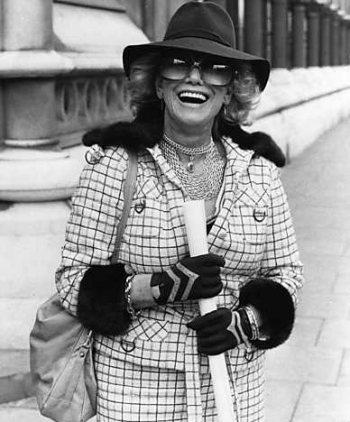
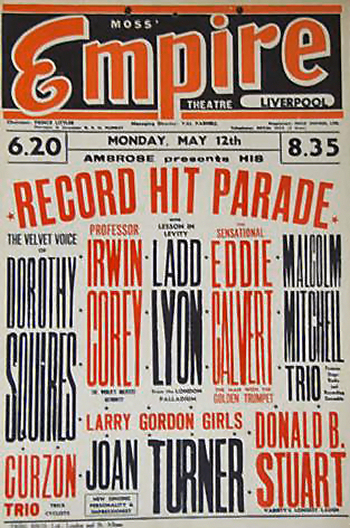
From the Burtey Fen Collection - many thanks to Mark Willerton

Click to enlarge and read
entire article
This was the first time I saw Dorothy. I had been to see Shirley Bassey in November 73 and was knocked out. I new Dorothy had a similar style and when she was at our local theatre, booked tickets. No, she wasn't as polished as Shirley, no the orchestra wasn't as
professional, yes her false eyelashes came off, yes she hit wrong notes and was out of tune at times but, what a show! Became a fan at sixteen and went on to see her many more times, the last
time, at Wimbledon.
- Stephen Debell

Geri Smith has added new dates for her one-woman show The Dorothy Squires Story which she first performed at the Edinburgh Festival some while back, and has since repeated several times with great success. Geri will be performing at a matinee performance in Llwyn-y-Pia, Rhonda Valley, South Wales, on 4 June. More importantly for London (and Home Counties) based Dorothy Squires fans,, she will be taking the show to the annual Henley Fringe Festival, with matinee and evening performances at the Chamber Room in Henley scheduled for July 23, 24 and 25.
Welsh
Legends
Dorothy
Squires
was
the
first
featured
name
in
the
second
BBC
TV
Wales
series
of
Welsh
Greats,
which
aired
on
23
February
2009.
Produced
by
Dafydd
O’Connor,
and
presented
by
Cerys
Matthews
of
the
best-selling
Welsh
band
Catatonia,
the
programme
was
an
excellent
30-minute
overview
of
Dorothy’s
long
career
and
turbulent
personal
life,
and
included
some
footage
previously
unseen.
Radio
Times
(in
its
Welsh
edition)
billed
it:
“Cerys
Matthews
presents
a
profile
of
the
glittering
yet
tragic
life
of
Dorothy
Squires,
the
Welsh
diva
who
was
one
of
the
biggest
stars
of
the
1940s
but
died
a
virtual
recluse
in
1998.”
Unlike
many
other
programmes
of
this
nature,
the
Welsh
Legends
programmes
do
not
have
‘taking
heads’
as
such
and
much
of
the
story
was
told
by
the
featured
subject
via
archive
footage
(other
names
in
the
series
have
included
actress
Rachel
Roberts,
Richard
Burton,
Wynford
Vaughan
Thomas
and
Sir
Harry
Secombe).
The
Dorothy
programme
included
some
interview
footage
originally
seen
in
the
Rain
Rain
Go
Away
documentary
(broadcast
in
early
1999,
just
before
Dorothy‘s
death),
and
also
some
not
previously
seen.
There
were
also
a
couple
of
clips
in
colour
from
the
Stars
In
Their
Eyes
film,
as
well
as
an
extract
from
The
Big
Time
(which
introduced
Sheena
Easton
to
fame
and
fortune)
and
film
interview
footage
featuring
Sir
Roger
Moore
(previously
seen).
The
choice
of
Cerys
Matthews
(who
had
a
Top
10
hit
with
Tom
Jones
on
the
oldie
Baby
It’s
Cold
Outside
a
while
back)
was
particularly
inspired
as
Cerys,
like
Dorothy,
is
also
from
Llanelli
and
it
was
interesting
to
see
a
contemporary
pop
artist
presenting
the
programme,
as
opposed
to
an
’older’
name.
Overall,
the
programme
was
fair
and
balanced,
underlining
Dorothy’s
climb
to
success
and
how
popular
she
was
during
her
heyday.
Naturally
there
was
also
much
emphasis
on
the
latter
years
when
things
began
to
go
downhill,
but
that
made
for
a
gripping
story.
Hopefully
the
programme
will
have
helped
to
ignite
further
interest
in
Dorothy
Squires,
and
it
is
only
a
pity
that
it
could
only
be
watched
in
Wales
(although
it
could
be
viewed
via
the
internet
for
a
week
after
its
transmission).
Thanks for an excellent programme, Dafydd.
Charlie
Gracie
 Charlie
Gracie
junior
has
been
in
touch
with
the
website,
with
some
fascinating
memories
of
his
father’s
association
(albeit
briefly!)
with
Dorothy
Squires.
Charlie
Gracie
junior
has
been
in
touch
with
the
website,
with
some
fascinating
memories
of
his
father’s
association
(albeit
briefly!)
with
Dorothy
Squires.
Charlie
wrote:
“What
a
great
site
for
Dorothy!
She
was
indeed
a
great
star
who
gave
her
all
to
her
fans
-
whether
on
record,
or
in
live
performances.
My
father,
whose
hits
included
the
number
one
Butterfly,
Fabulous,
Wandering
Eyes
and
Nine-Nine
Ways,
almost
got
to
work
with
her.
In
1957
Dad
and
Dot
were
supposed
to
have
joint
top
billing
at
the
London
Hippodrome,
but
when
Lew
and
Leslie
Grade
demoted
Dorothy
to
‘featured
artist’
(not
my
Dad’s
doing)
she
walked
off
the
show.
Even
though
my
Dad
was
a
hot
recording
artist
at
the
time,
one
could
understand
how
Dorothy
felt,
having
been
a
well-established
artist
for
many
a
year
in
her
homeland.
However
there
were
never
any
hard
feelings
between
my
Dad
and
Dot.
In
fact
Dad
later
attended
one
of
her
concerts
and
Dot
introduced
him
from
the
stage
and
gave
Dad
a
kiss
on
the
cheek!
Your site brings back some great memories and I shared it with my father who, although now 72, is still playing all over the world. In November 2008 he completed a UK tour at the Liverpool Empire and was back for more concerts recently.”


Charlie
forwarded
a
recent
news
item
about
the
fact
that
The
Hippodrome
(which
later
became
The
Talk
Of
The
Town
before
reverting
back
to
The
Hippodrome,
albeit
in
its
latest
guise
as
a
dance
club)
and
its
need
for
preservation
(the
latest
talk
is
that
it
is
to
become
a
gambling
casino).
The
London
Hippodrome
has
had
a
temporary
reprieve
as
it
has
it
has
now
re-opened
as
a
nightclub
for
a
limited
period.
Here
is
an
impassioned
please
from
Charlie
Gracie
junior
on
the
possible
future
demise
of
the
venue.
“I
was
greatly
distressed
to
hear
that
one
of
the
great
entertainment
venues
of
the
20th
century,
the
London
Hippodrome
might
be
shut
down
-
or
demolished
completely.
My
father
Charlie
Gracie,
the
first
solo
rock
‘n’
roll
star
(after
Bill
Haley’s
Comets)
to
bring
the
music
to
the
UK
(1957),
was
the
last
star
to
appear
at
the
venue
before
its
conversion
into
a
cabaret
house
(The
Talk
Of
The
Town)
in
1958.”
The
article
recalled:
“Charlie
Gracie
created
quite
a
stir
when
the
Grade
agency
booked
him
on
an
exclusive
tour
in
the
late
summer
and
fall
of
1957.
Dorothy
Squires,
your
‘Bette
Davis
of
Song’,
refused
to
take
second
billing
to
my
father
at
The
Hippodrome.
Claiming
she
‘had
never
heard
of
him’
and
the
fact
that
he
was
an
ambassador
of
this
‘new-fangled
rock
‘n’
roll
stuff),
didn’t
improve
her
opinion
of
him.
“However
all
this
created
a
big
publicity
circus
for
my
father
and
garnered
him
a
wealth
of
press
coverage.
He
was
a
smash
at
The
Hippodrome
and
later
in
the
provinces,
and
he
returned
for
another
extensive
tour
in
the
spring
of
1958.
Ms
Squires
later
apologised
and
they
met
at
some
other
venue.
This
is
such
fun
stuff
to
look
back
upon,
and
it
is
one
of
the
many
great
stories
surrounding
The
Hippodrome,
I’m
sure.”
Many
thanks
to
Charlie
for
sharing
this
with
us.
The
late
George
Harrison,
Cliff
Richard,
Van
Morrison
and
Graham
Nash
have
all
credited
Charlie
senior’s
singing
and
guitar
style
on
their
own
careers,
and
Sir
Paul
McCartney
covered
Charlie’s
Fabulous
in
1999.
For
further
information
about
Charlie’s
career
and
activities,
check
out
his
website
www.charliegracie.com.
Jean
Campbell
Glasgow-born
popular
singer
Jean
Campbell
died
in
2003
after
a
long
career
as
a
recording
artist
and
stage
performer.
Jean
recorded
many
songs
for
Embassy
Records,
the
Woolworth
low-price
label
(aah,
memories!),
covering
many
of
the
current
hits
of
the
day
such
as
Brenda
Lee’s
Sweet
Nuthins,
Connie
Francis’
Everybody’s
Somebody’s
Fool,
and
Helen
Shapiro’s
Don’t
Treat
Me
Like
A
Child
(Jean
was
34
at
the
time!).
Jean
also
sang
on
many
still-remembered
TV
commercials
including
for
Fairy
Liquid
(Hands
that
do
dishes
can
be
as
soft
as
your
face),
Beanz
Meanz
Heinz,
and
Keep
Going
Well,
Keep
Going
Shell.
Her
obituary
in
The
Independent
recalled
that
Jean
had
replaced
Pearl
Carr
as
the
female
vocalist
with
Cyril
Stapleton
and
his
Orchestra.
“Encouraged
by
the
singer
Dorothy
Squires,
Campbell
made
solo
recordings
for
Parophone,
although
she
often
found
herself
competing
against
major
artists
who
had
recorded
the
same
songs
such
as
Frankie
Laine
and
Pat
Boone.”
Many
thanks
to
Mark
Wallace
for
bringing
this
brief
item
to
the
website’s
attention.
Mark
Speight
The
late
children’s
TV
presenter
Mark
Speight
died
under
tragic
circumstances
in
April
2008.
Mark
Willerton
came
across
the
following
news
story:
“It’s nearly a year since the death of TV presenter Mark Speight, who committed suicide after not being able to cope with the death of his girlfriend Natasha Collins in January of 2008. Mark was a fan of Dorothy Squires and a friend stated in the Sunday Express soon after his death: “Mark had very eclectic tastes and he loved the Dorothy Squires song We Clowns, which had the lyric ‘We clowns who choose to entertain, with painted smiles that hide the pain’. He would often listen to that and it did get me thinking about why it seemed to resonate with him.”
Mark Willerton, official curator of the website for the late Lita Roza (www.litaroza.co.uk), who died in 2008, as well as for Kathy Kirby (www.KathyKirby.org.uk), with whom he is a close friend), and who also runs the fascinating Burtey Fenn Collection near Spalding in Lincolnshire, has kindly supplied these two cuttings from Lita’s own private collection. One picture shows Lita arriving with Dorothy at the High Court in London, when Dorothy was suing her former professional partner Billy Reid for permission to re-record some of the many songs that Reid had composed for her. Dorothy won the case and subsequently recorded the Dorothy Squires Sings Billy Reid album. The second picture shows Lita, Harry Secombe and Dorothy in party mood.


 Avid
Records
has
released
The
Unforgettable
Pat
Kirkwood
(cat.
No.
Avid
Easy
AMSC
966,
price
£7.99)
and
it
will
be
of
interest
to
Dorothy
Squires
fans
as
it
features
several
recordings
that
featured
in
the
Fifties
film
Stars
In
Your
Eyes
in
which
the
late
Miss
Kirkwood
co-starred
with
Dorothy.
The
songs
are
I’d
Pick
Piccadilly,
Stars
In
My
Eyes
and
The
Man
That
Wakes
The
Man
That
Blows
Reveille.
This
excellent
set
has
been
compiled
by
the
renowned
music
archivist
Hugh
Palmer
and
the
extensive
line
notes
have
been
notated
by
the
highly
respected
author
and
newspaper
writer
Michael
Thornton.
Spanning
56
years,
from
the
leading
role
in
her
first
film
at
the
age
of
17,
to
her
final
stage
performance
in
1994
at
the
age
of
73,
this
historic
compilation
features
66
songs,
29
of
which
have
never
been
released
on
CD
before.
Avid
Records
has
released
The
Unforgettable
Pat
Kirkwood
(cat.
No.
Avid
Easy
AMSC
966,
price
£7.99)
and
it
will
be
of
interest
to
Dorothy
Squires
fans
as
it
features
several
recordings
that
featured
in
the
Fifties
film
Stars
In
Your
Eyes
in
which
the
late
Miss
Kirkwood
co-starred
with
Dorothy.
The
songs
are
I’d
Pick
Piccadilly,
Stars
In
My
Eyes
and
The
Man
That
Wakes
The
Man
That
Blows
Reveille.
This
excellent
set
has
been
compiled
by
the
renowned
music
archivist
Hugh
Palmer
and
the
extensive
line
notes
have
been
notated
by
the
highly
respected
author
and
newspaper
writer
Michael
Thornton.
Spanning
56
years,
from
the
leading
role
in
her
first
film
at
the
age
of
17,
to
her
final
stage
performance
in
1994
at
the
age
of
73,
this
historic
compilation
features
66
songs,
29
of
which
have
never
been
released
on
CD
before.
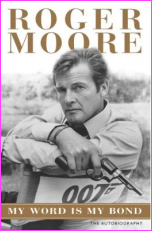
Sir Roger Moore’s autobiography My Word Is My Bond has been published by Michael O’Mara Books and, as one would expect, Dorothy who was married to the former Saint and James Bond star, and was very influential in helping his career during the Fifties, features extensively. Sir Roger writes about his marriage to Dorothy with considerable affection, despite the fact that it all ended so acrimoniously, with Dorothy refusing him a divorce for several years after their much-publicised break-up in 1961. The book includes one photo of the Moores arriving back in Britain from the United States around 1960. Interestingly his third wife Louisa is also featured just once photographically while his fourth and latest wife Kristina naturally takes top honours with five photos! Dorothy aside, My Word Is My Bond is a highly enjoyable read for Sir Roger’s many admirers, and underlines his reputation for being a thoroughly decent man (although his ex-wives would probably disagree!). Sir Roger promoted the book with press and TV interviews - frequently mentioning Dorothy - and he did several booking signings in Britain, as well as in the United States and Australia.
|
|
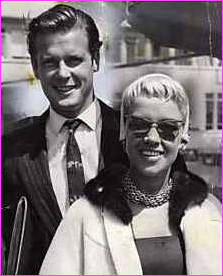
Incidentally, Dorothy is mentioned briefly in composer Leslie Briccuse’s excellent and very entertaining 2006 memoirs The Music Man, published by Metro. Bricusse of course wrote several stage musicals with the late Anthony Newley, including Stop The World I Want To Get Off and The Roar Of The Greasepaint - The Smell Of The Crowd, as well as the music for the movie hit Doctor Doolittle and Scrooge, while his many hits include Who Can I Turn To?, What Kind Of Fool Am I?, Gonna Build A Mountain, Portrait Of My Love, Goldfinger, You And I (from Goodbye Mr. Chips) and so many more.
Recalling the first night of Stop The World In Want To Get Off at the Queen’s Theatre in London’s Shaftesbury Avenue in 1961, Bricusse recalls how nervous he was about the opening:
“The first 20 minutes of the opening night performance seemed to my cat-on-a-hot-tin-roof mind to be interminably dull and boring, and my heart stopped when four people in the middle of Row E got up and walked out, arguing volubly about what I assumed was their disgust with the show. I sank further into my seat, waiting for the rest of the audience to follow them. They didn’t, and three minutes later Newley brought the house down with Gonna Build A Mountain.”
A little later in the book, Bricusse remembers Roger Moore introducing his new Italian girlfriend Luisa Matteoli at Maxim’s restaurant. “Roger was still married to, but recently separated from, his second wife, a famous and tempestuous Welsh songstress called Dorothy Squires. Early in the evening, clearly wishing to get it off his chest, Roger confessed to me that it was one of his many contretemps with Madame Squires that had caused the precipitous departure of his party of four from Row E of the Queen’s Theatre on the first night of Stop The World for which he now wished to apologise profusely and hope that one day I would find it in my heart to forgive him profusely. I said I was glad he wasn’t a critic.”
Bricusse adds: “Luisa spoke hilarious Chico Marx English, was deliciously and paralysingly funny, and seemed likely to become a worthy successor to her Welsh forerunner in the tempestuous department.”
And later in his memoirs: “Back In Denham Roger Moore, after several arduous years of trying, had finally achieved his bitterly fought divorce with the Welsh singing star Dorothy Squires, and was now free to marry the lovely Luisa Matteoli which he promptly did, because the lovely Luisa would have killed him if he hadn’t.”
Finally the 2003 Anthony Newley biography Stop The World by Garth Bardsley (published by Oberon Books) briefly mentions Dorothy. Recalling Newley’s early years, Bardsley writes: “One evening, after a show in Newcastle, Newley was introduced to Ian Fraser who was on contract with Tony’s record label Decca. A classically trained pianist and phenomenally talented musician, Fraser had already recorded with Jess Conrad and Dorothy Squires as well as recording two albums of his own.”
Ian Fraser went on to working with Newley and Bricusse in particular for many years, and has arranged the scores for many top films and theatre shows. For the record, he arranged Dorothy’s July 1960 single This Place Called Home/Trust In Me on Decca Records
Gerri Smith reprised her excellent play-with-music The Dorothy Squires Story with two performances at the Arts Wing of Swansea Grand on February 18 2009. Once again, Gerri captured the essence of Dorothy’s dramatic lifestyle and also reprised several of the songs that Dorothy performed at her 1970 London Palladium comeback concert. Many of Dorothy’s fans were in attendance and Gerri’s rousing version of My Way brought many members of the audience to their feet. She was rewarded with armfuls of flowers including a bouquet from the ever-loyal John Lloyd who had travelled all the way from London.
Peter Jones was for many years the editor of the popular pop music magazine Record Mirror and got to know many of the big names of the Sixties and the early Seventies. Two of his particular favourites were Dorothy Squires and Dusty Springfield who he met and interviewed on many occasions. Peter first met Dorothy when she was performing in Portsmouth at the local Press Ball in the Fifties. Peter asked Dorothy if she would perform at a charity event to be held on the Clarence Pier in Southsea.
“Dorothy’s sister-in-law was of course Joyce Golding, who was also a very well known variety act, and she was married to Dorothy’s brother Fred Squires. The whole family used to stage and perform in pantomimes and variety shows, and Fred said that they were all coming down to perform at the charity event. I had to collect Dorothy on the day of the show and it was quite something to see how she got everybody organised!”
Peter recalls that Dorothy said that her boyfriend was coming down from London on the last train that same evening. “Apparently he was an up-and-coming actor. It turned out to be Roger Moore of course who was tall and extremely handsome and who ideally complemented Dorothy’s blonde and petite looks and charismatic personality. Roger had a very warm personality and when I subsequently met him at an amateur boxing tournament he invited me to one of the famous parties that he and Dorothy held at the Bexley mansion, and it was the first of many that I went to. It was amazing the famous people who would be there, not just variety artists but actors as well.
“Dorothy was always the perfect hostess and Roger was always very polite and courteous. Much later I frequently met Dorothy during my era with Record Mirror and she was always a great interview, providing good copy. When she released her first President album Say It With Flowers in 1968 I remember championing it in the magazine, and the following year of course she returned to the pop charts with For Once In My Life. It was great to see her making a professional comeback and the icing on the cake was the London Palladium concert in 1970. Dorothy remains to me one of the greatest female performers that this country has ever produced.”
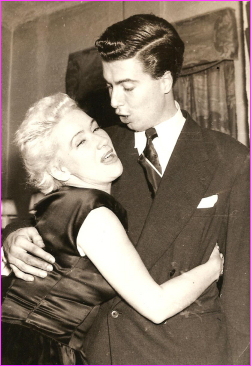
Thanks for these memories Peter, who is pictured with Dorothy at the Portsmouth Press Ball.
PHOTOGRAPHIC MEMORIES OF DOROTHY


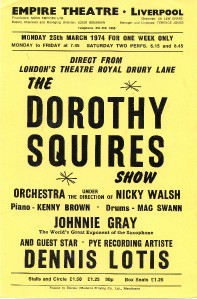

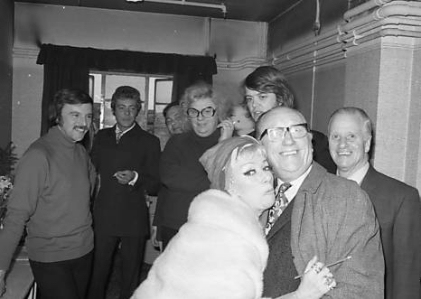
© 2005 - 2012 www.dorothysquires.co.uk


